elias
elias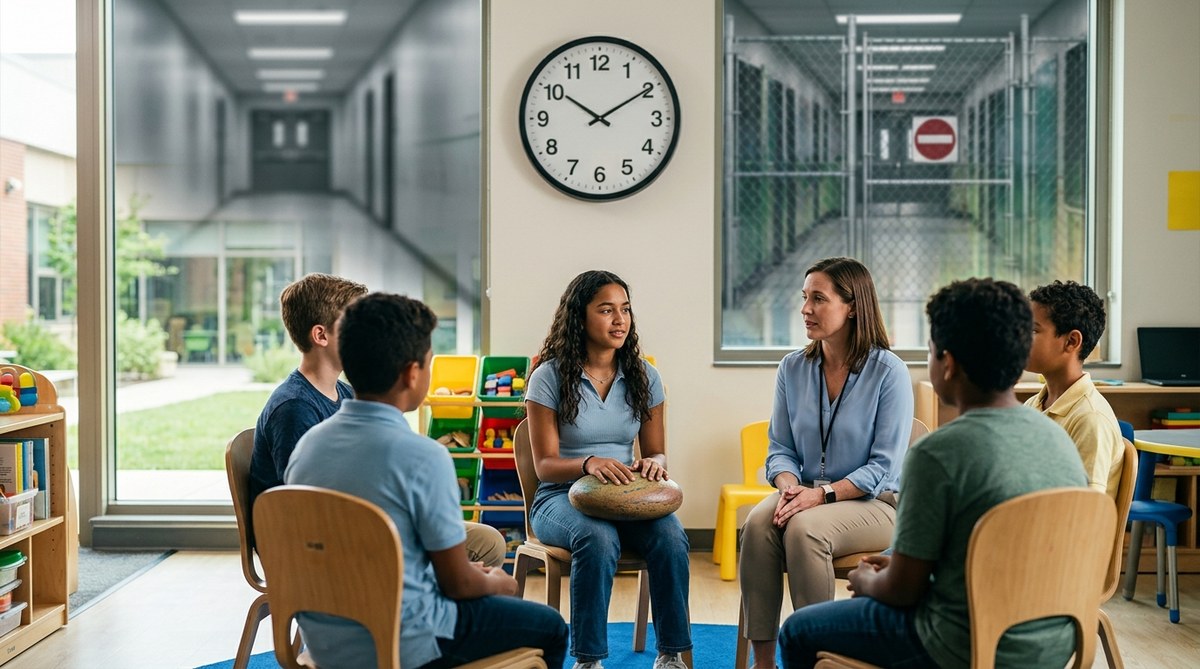
Restorative justice is a proven, evidence based alternative to punitive discipline that can dismantle the school-to-prison pipeline when implemented with fidelity, adequate funding, and sustained commitment. This guide covers research backed outcomes, common implementation mistakes, and actionable strategies for educators and policymakers ready to create safer, more equitable schools by 2026.
The numbers are staggering. Each year, millions of United States students miss class due to out of school suspensions, and the fallout lands hardest on Black, Brown, and disabled learners. The school to prison pipeline is not a mystery. It is a predictable path from classroom to cell, and it runs straight through disciplinary policies that push young people out instead of keeping them engaged.
Restorative justice practices offer a meaningful way forward. They ask a different set of questions. Instead of “what rule was broken and what punishment fits,” they ask “who was harmed, what do they need, and how can everyone involved make things right?” That shift matters. It changes the entire culture of a school. And increasingly, educators and advocates are asking whether this approach can truly dismantle the school-to-prison pipeline by 2026.
Restorative justice is more than a discipline alternative. It is a structural tool that can interrupt the school to prison pipeline by addressing harm, repairing relationships, and shifting school culture. Evidence suggests that when implemented with fidelity, restorative practices reduce exclusionary discipline and build safer, more equitable learning environments for all students.
The connection between school discipline and the criminal justice system has never been more visible. Across the United States, students who are pushed out of classrooms for minor infractions often find themselves caught in a system that funnels them toward incarceration. This is the school to prison pipeline, and it is not inevitable. Restorative justice offers a proven path forward, one that keeps students in school and breaks cycles of harm. The question is no longer whether restorative practices can work. The question is whether schools are ready to commit to them fully.
## Why the School to Prison Pipeline Persists
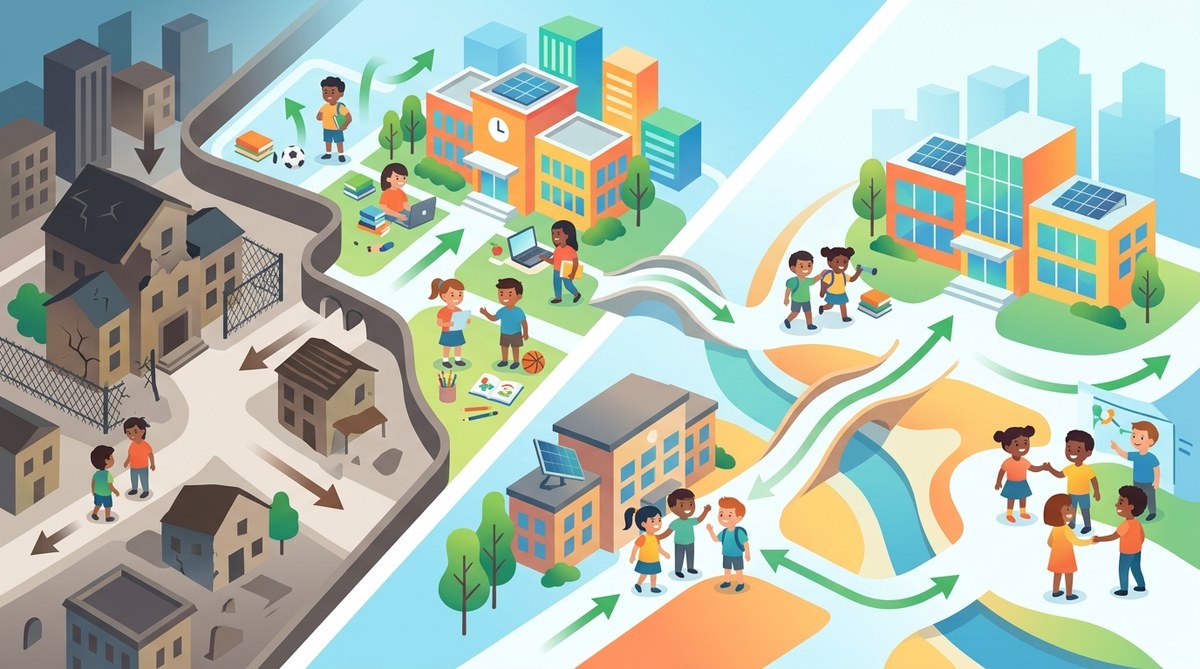
The school to prison pipeline is not a single policy. It is a web of disciplinary practices, policing in schools, and systemic bias that pushes students out of classrooms and into the justice system. Zero tolerance policies play a major role. These policies started in the 1990s and require automatic punishment for certain infractions, regardless of circumstances. As a result, students face suspensions and expulsions for behaviors that once earned a trip to the principal’s office or a phone call home.
Data shows the impact is not equal. Black students, Latinx students, and students with disabilities are disproportionately removed from school. These removals often lead to contact with law enforcement. A single suspension can triple the chance of a student entering the juvenile justice system within that school year. This is why educators and advocates are asking a serious question: can restorative justice practices dismantle the school-to-prison pipeline by 2026?
The answer is not a simple yes. But there is growing evidence that restorative practices can break the cycle. When schools shift from exclusion to connection, they keep students learning. They also create safer, more supportive environments. This article explores how restorative justice works, what the research says, and what it takes to implement it at scale.
Restorative justice can help dismantle the school-to-prison pipeline by replacing punitive discipline with dialogue, accountability, and healing. While not a cure-all, evidence shows it reduces suspensions, improves school climate, and narrows racial disparities. Success depends on strong leadership, staff training, and a commitment to systemic change.
## What Is the School-to-Prison Pipeline?
The school-to-prison pipeline is a troubling pattern. It describes how students get pushed out of schools and into the justice system. This happens through zero tolerance policies, harsh discipline, and the presence of police in schools. Minor infractions like talking back or being late can lead to suspensions. Once students are removed from class, they fall behind. Some never return.
The pipeline does not affect all students equally. Black students, Latino students, and students with disabilities are disproportionately impacted. They face harsher punishments for the same behaviors as their white peers. A student who is suspended just once is more likely to repeat a grade, drop out, or end up incarcerated. This is not just an education issue. It is a civil rights issue.
Restorative justice offers a different path. Instead of asking “what rule was broken and what punishment fits,” it asks “what harm was done and how can we repair it?” This shift in mindset is powerful. It changes the conversation from control to community.
## How Restorative Justice Disrupts the Pipeline
Restorative justice is not a single program. It is a philosophy and a set of practices. In schools, it includes things like restorative circles, peer mediation, and conferencing. These practices bring together the person who caused harm, the person who was harmed, and the community. Together, they talk through what happened and decide how to make things right.
This approach keeps students in school. Instead of suspending a student for a fight, a school might hold a restorative circle. The student has to face the impact of their actions. They have to listen. They have to take responsibility. This is harder than a few days off, but it is more effective. It teaches accountability without pushing a student out.
Research supports this. Schools that adopt restorative practices often see dramatic drops in suspensions and expulsions. They also see improvements in attendance, grades, and school climate. Students report feeling safer and more connected. Teachers report fewer classroom disruptions. Over time, these changes reduce the number of students who enter the justice system.
## What the Evidence Shows
The evidence for restorative justice in schools is growing, though mixed. Some studies show significant reductions in racial disparities in discipline. Others show that implementation matters. A program that is poorly implemented will not work. It can even backfire if staff are not trained or if the culture does not support it.
One of the most cited examples is Oakland Unified School District in California. After implementing restorative justice in some schools, the district saw a drop in suspensions and expulsions. Chronic absenteeism also decreased. Similar results have been seen in Chicago, Denver, and other districts across the country.
But the evidence is not universal. A large study of restorative practices in Pittsburgh found mixed results. Some schools saw improvements, while others did not. This tells us that restorative justice is not a silver bullet. It is a tool that works best when paired with other reforms. These include implicit bias training, hiring more school counselors, and ending exclusionary discipline for minor offenses.
## The Role of School Climate and Leadership
School climate is the foundation. Restorative justice cannot thrive in a school where the culture is punitive. It requires a shift in how adults see students. Instead of asking “what is wrong with this student?” they must ask “what happened to this student?” This trauma-informed approach is essential.
Leadership matters too. Principals who model restorative practices and support their staff see better outcomes. They need to provide time for training and collaboration. They also need to be willing to change policies that rely on exclusion. This includes rewriting student handbooks and revising discipline matrices.
Teachers also need support. Restorative practices require skills like active listening, facilitation, and conflict resolution. These are not always taught in teacher preparation programs. Ongoing professional development is critical. Without it, restorative justice becomes just another buzzword.
## Challenges and Common Pitfalls
Implementing restorative justice is not easy. One of the biggest challenges is the school-to-prison pipeline itself. Many schools have police officers on campus. These officers are often the ones who arrest students for behavior that used to be handled in the principal’s office. To truly dismantle the pipeline, we need to rethink the role of police in schools.
Another challenge is equity. If restorative justice is implemented only in some classrooms, it can create disparities. Students of color may still face harsh punishment while their white peers get a circle. This is why a school-wide approach is important. It must be consistent and fair.
There is also the issue of time. Restorative circles take time. Teachers already have crowded schedules. Without dedicated time for these practices, they will not happen. Schools need to build restorative time into the school day. This might mean shorter classes, advisory periods, or dedicated blocks for circles.
## Restorative Justice and Racial Equity
One of the most compelling arguments for restorative justice is its potential to reduce racial disparities. Research shows that Black students are suspended at higher rates than their white peers. This is not because they misbehave more. It is because of bias and harsher interpretations of behavior.
Restorative justice can help. By focusing on dialogue and understanding, it disrupts the cycle of bias. Students have a chance to tell their side of the story. Adults are forced to listen. This does not eliminate bias, but it makes it harder to act on it unconsciously.
Some districts have seen significant reductions in the discipline gap after adopting restorative practices. For example, the Chicago Public Schools reported that schools with strong restorative programs had smaller racial disparities in suspensions. This is a hopeful sign, but it requires ongoing effort. Schools must also address bias in hiring, discipline policies, and classroom practices.
## The Cost of Doing Nothing
The cost of the school-to-prison pipeline is enormous. It is measured in human lives. Students who are pushed out of school are more likely to be incarcerated. Incarceration costs taxpayers tens of thousands of dollars per year per person. But the cost is also social. Families are torn apart. Communities lose their young people.
Prevention is cheaper than incarceration. Restorative justice programs cost money to implement. They require training, materials, and staff time. But the return on investment is significant. Keeping one student in school can save thousands of dollars in incarceration costs. It also improves outcomes for that student and their community.
## Can We Dismantle the Pipeline by 2026?
This is the question on everyone’s mind. The short answer is: not completely. Systemic change takes time. The pipeline is built into our education and justice systems. It is supported by policies, laws, and cultural beliefs. Dismantling it requires a multi-pronged approach.
However, we can make significant progress by 2026. Schools can adopt restorative justice practices. Districts can revise their discipline policies. States can pass laws that limit suspensions for minor offenses. Police can be trained in restorative approaches. It will not happen overnight, but it is possible.
The most important thing is to start. Every school that adopts restorative justice is a step in the right direction. Every student who is kept in school instead of pushed out is a victory. The goal is not perfection. It is progress.
## Steps for Schools and Districts
If you are an educator or administrator, you might be wondering where to start. Here are some practical steps:
First, assess your current discipline data. Look at suspension rates, expulsion rates, and disparities. This will give you a baseline. It will also help you identify problem areas.
Second, build buy-in. Restorative justice cannot be imposed from the top down. It needs to be embraced by teachers, students, and parents. Hold information sessions. Share the research. Listen to concerns.
Third, invest in training. This is not a one-day workshop. It requires ongoing professional development. Look for training providers with experience in restorative justice. Consider sending a team to a conference or bringing in a consultant.
Fourth, start small. You do not need to overhaul your entire school at once. Start with one grade level or one restorative circle. Learn from your mistakes. Expand gradually.
Fifth, evaluate and adjust. Track your data. Talk to students and teachers. What is working? What is not? Be willing to change course.
## Restorative Justice in Action: Real-World Examples
Let us look at a few real-world examples. In Denver, the school district implemented restorative justice in response to high suspension rates. They trained staff and created restorative practices teams. Over several years, suspensions dropped significantly. The district also reported a reduction in racial disparities.
In Cleveland, a program called the Peaceful Schools Initiative used restorative circles to address conflict. Students reported feeling safer and more connected. The program was so successful that it expanded to other schools.
In New York City, the Department of Education implemented restorative justice in schools with high suspension rates. They hired restorative justice coordinators and trained staff. The result was a decline in suspensions and an improvement in school climate. These examples show that change is possible.
## What Policymakers Can Do
Policymakers have a role to play too. They can pass laws that limit exclusionary discipline. For example, some states have passed laws that ban suspensions for students in grades K-3. Others have restricted suspensions for minor offenses like talking back or refusing to follow directions.
Policymakers can also provide funding. Restorative justice programs need resources. This includes funding for training, staff, and materials. States can create grant programs to help schools get started.
Finally, policymakers can collect and publish data. This holds schools accountable. It also helps identify best practices. When schools know they are being watched, they are more likely to make changes.
## The Role of Parents and Communities
Parents and communities have a role to play too. They can advocate for restorative justice in their local schools. They can attend school board meetings and voice their support. They can volunteer to help facilitate circles or provide other support.
Community organizations can also help. Nonprofits like the Advancement Project and the National Education Association have resources for schools. They offer training, toolkits, and advocacy support. Schools do not have to do this alone.
Parents can also support restorative practices at home. They can talk to their children about conflict resolution. They can model empathy and accountability. When parents and schools work together, the impact is stronger.
## The Role of Policy in Ending the Pipeline
Policy changes are essential. Schools cannot do this alone. They need support from the district, the state, and the federal government. This includes funding for training and staff, as well as changes to laws and regulations.
For example, some states have passed laws that ban out-of-school suspensions for certain minor offenses. Others have restricted the use of police in schools. These policies send a clear message that exclusion is not the answer.
At the federal level, there have been calls to end the school-to-prison pipeline. The Department of Education has issued guidance on school discipline. However, this guidance is not always enforced. There is a need for stronger accountability measures.
## The Role of Parents and Communities
Parents and communities also have a role to play. They can advocate for restorative justice policies at the school and district level. They can volunteer to facilitate circles or provide support. They can also hold schools accountable for their discipline data.
Community organizations can partner with schools to provide restorative services. These might include after-school programs, mentoring, and conflict resolution. By working together, schools and communities can create a support network that keeps students engaged.
## What About Police in Schools?
One of the most controversial aspects of the pipeline is the presence of police in schools. School resource officers (SROs) were originally brought in to build relationships. But too often, they end up arresting students for behavior that used to be handled in the office.
If we are serious about dismantling the pipeline, we need to have a conversation about SROs. Some districts have ended their contracts with police. Others have kept them but changed the protocols. Officers are now trained in restorative justice and de-escalation. They are told to avoid arrests for minor offenses.
This is a complex issue. There is no one-size-fits-all answer. But it is clear that the current model is not working. Students of color are disproportionately arrested in schools. This has to change.
## The Role of State and Federal Policy
Schools cannot do this alone. They need support from policymakers. This includes funding for restorative justice programs. It also includes laws that limit exclusionary discipline.
Some states have already taken action. California passed a law that limits suspensions for “willful defiance” of authority. This was a major victory for advocates. Other states have followed suit. They have banned suspensions for students in early grades or for minor offenses.
Federal policy also matters. The U.S. Department of Education has issued guidance on school discipline. It encourages schools to reduce their reliance on exclusionary discipline. It also requires schools to address racial disparities. While this guidance is not binding, it sets a tone.
## The Role of Parents and Community
Restorative justice does not just happen in schools. It requires community support. Parents need to understand what it is and why it matters. They need to be involved in the process. Community organizations can provide training, funding, and advocacy.
Community members can also help hold schools accountable. They can attend school board meetings. They can push for policies that support restorative practices. They can volunteer to facilitate circles. They can donate money and resources.
The community also has a role in changing the narrative. Instead of calling students “bad” or “violent,” we need to see them as young people who need support. This requires a shift in mindset. It is not always easy, but it is necessary.
## The Future of Restorative Justice in Schools
The future of restorative justice depends on all of us. It is not just an education reform. It is a social justice movement. It challenges us to rethink how we treat young people. It asks us to see them not as problems to be fixed, but as members of our community.
As we look to 2026 and beyond, there is reason for hope. More schools are adopting restorative practices. More states are passing laws to end harsh discipline policies. More teachers are asking for training. The conversation is shifting.
But there is still much work to do. We need more research. We need better training. We need policies that support restorative approaches. We need to change the narrative from punishment to healing.
## How You Can Support Restorative Justice
You do not have to be a teacher or administrator to support restorative justice. Parents can advocate for these practices at their child’s school. Community members can volunteer to facilitate circles. Voters can support candidates who prioritize education reform.
You can also talk about it. Share this article. Start a conversation in your community. Many people have never heard of restorative justice. They may not know that there is an alternative to suspension. Your voice matters.
If you are a student, you can also get involved. Start a restorative justice club. Talk to your principal. Ask for a circle to address a school issue. You might be surprised by the response.
## The Future of School Discipline
The future of school discipline is restorative. This is not just a hope. It is a trend. More and more schools are moving away from zero tolerance and toward restorative practices. States are passing laws that limit suspensions for young students. Teacher preparation programs are starting to include restorative justice in their curriculum.
But there is still a long way to go. Many schools still rely on exclusionary discipline. Police are still present in many schools. We need a national commitment to change. This means funding for training and support. It means changing laws and policies. It means a cultural shift in how we think about discipline.
The good news is that the momentum is growing. Students are demanding change. Parents are organizing. Educators are innovating. The movement for restorative justice is real. It is not a trend. It is a fundamental shift in how we educate and support young people.
## Conclusion: A Path Forward
Can restorative justice practices dismantle the school-to-prison pipeline by 2026? Not entirely. But they can make a significant difference. The evidence is clear: when implemented well, restorative practices reduce suspensions, improve school climate, and narrow racial disparities. They keep students in school and out of the justice system.
The path forward is not easy. It requires investment, training, and a willingness to change. But the alternative is too costly. We cannot afford to keep pushing students out of school. We cannot afford to keep criminalizing normal adolescent behavior. Restorative justice offers a way forward. It is not a silver bullet, but it is a powerful tool.
If you are a parent, ask your school about restorative justice. If you are a teacher, learn about restorative practices. If you are a policymaker, support legislation that ends exclusionary discipline. We all have a role to play in dismantling the pipeline. The time to act is now. Every day a student is pushed out is a day we lose. Let us choose connection over exclusion, and healing over punishment. The future of our students depends on it.