elias
A student is sent home for wearing a natural hairstyle. Another is told their prom dress violates the rules because of their body type. A nonbinary student is forced to choose between two gendered dress code options that don’t fit who they are. These aren’t isolated incidents. Across the United States, school dress codes consistently target marginalized students more often than their peers. The data is clear: Black girls face discipline for dress code violations at disproportionately higher rates than white classmates. LGBTQ+ students are punished for expressing their identity. Students from low-income families struggle to afford specific clothing brands required by policy. The question every school must ask in 2026 is not whether dress codes exist, but whether they create a fair learning environment for every single student.
Dress code discrimination is a documented equity issue in U.S. schools, disproportionately affecting students of color, LGBTQ+ youth, and those from low-income backgrounds. This guide helps administrators and educators audit their current policies, understand implicit bias, and implement reforms that support all students. The goal is not to eliminate standards, but to replace punitive, biased rules with equitable ones that keep students in class and engaged in learning.
How Dress Codes Create Unfair Burdens
Many school dress codes were written decades ago. They often reflect the cultural norms of a single group while ignoring the diversity of the student body. The result is a system where some students are set up to fail before the first bell rings.
Here are the most common ways dress codes target marginalized students:
- Hair and head covering bans. Policies that prohibit natural Black hairstyles like braids, locs, or afros are a form of racial discrimination. Some schools also restrict religious head coverings like hijabs or turbans.
- Body shaming through gendered rules. Rules about skirt length, spaghetti straps, or leggings are often enforced more harshly against students with larger bodies or developing curves, especially girls and nonbinary students.
- LGBTQ+ exclusion. Dress codes that mandate “boys wear pants” and “girls wear skirts” erase nonbinary and transgender students entirely.
- Financial barriers. Requiring specific brands, logos, or expensive clothing places an unfair burden on low-income families.
- Vague language. Terms like “distracting clothing” or “appropriate attire” leave room for subjective enforcement based on personal bias.
These issues are not hypothetical. A 2022 study from the National Women’s Law Center found that Black girls are suspended for dress code violations at rates that are simply not comparable to their white peers. When students are sent home or removed from class, they lose instructional time. That lost time adds up, widening achievement gaps.
The Hidden Cost: Lost Learning and Student Dignity
When a student is pulled out of class for a dress code violation, the message they receive is clear: your appearance is more important than your education. This is especially damaging for students who already feel marginalized. Being singled out in front of peers can cause shame, anxiety, and disengagement from school.
Schools that enforce strict, biased dress codes often see higher rates of absenteeism and lower academic performance among affected groups. The connection between feeling safe at school and being ready to learn is well documented. If a student is worried about being dress coded, they cannot fully participate in their own education.
“A dress code should help students focus on learning, not create a system of surveillance that targets the most vulnerable kids. If your policy is pushing students out of the classroom, it is failing its core purpose.” – Dr. LaShaun Johnson, education equity researcher
A Simple Framework for Auditing Your School’s Dress Code
Before you can fix a problem, you have to see it clearly. Here is a step by step process for evaluating your current policy.
-
Collect your data. Pull discipline records from the last three school years. Look specifically at dress code violations. Break down the data by race, gender, socioeconomic status, and disability status. If you do not have this data, start collecting it immediately. You cannot address what you cannot measure.
-
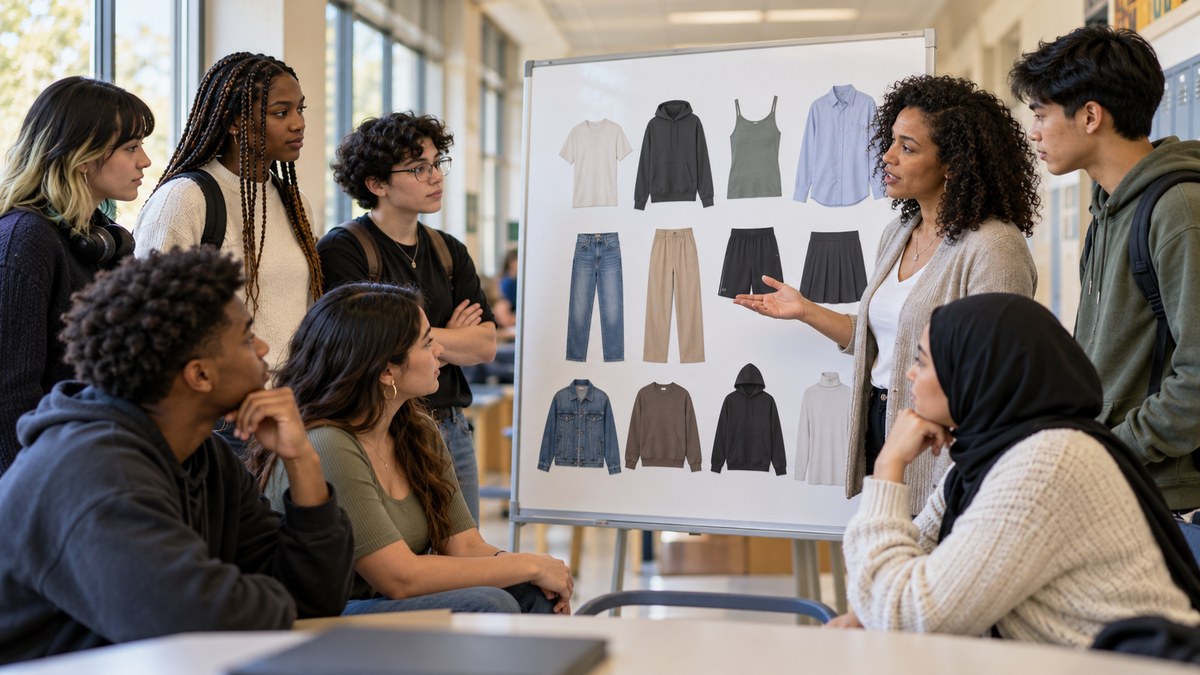
Read your policy through an equity lens. Sit down with a copy of your current dress code. Highlight every phrase that is subjective, like “modest,” “distracting,” or “neat.” Count how many times specific genders are mentioned. Note any language about hair that could target natural Black hairstyles.
-
Interview students and families. Hold listening sessions with students from marginalized groups. Ask them directly: Have you ever been dress coded? How did it make you feel? Do you think the rules are applied fairly? Their answers will reveal the gap between the policy on paper and the reality in the hallways.
-
Compare your policy to model codes. Organizations like the American Civil Liberties Union and the National Education Association have published sample equitable dress codes. See how your school’s language stacks up.
-
Create a revision committee. Include students, parents, teachers, and community advocates in the rewrite process. Make sure the committee reflects the diversity of your school population.
Common Mistakes vs. Best Practices in Policy Design
The table below breaks down typical pitfalls and the alternatives that actually work.
| Mistake | Why It Fails | Equitable Alternative |
|---|---|---|
| Banning “distracting” clothing | Enforced subjectively, often targets girls and LGBTQ+ students | Focus on safety and hygiene only, remove distraction language |
| Requiring specific brands or logos | Creates financial hardship for low-income families | Allow any brand; prohibit only explicit or violent imagery |
| Gendered dress code (boys wear X, girls wear Y) | Excludes nonbinary and transgender students | Use gender neutral language (all students may wear…) |
| Banning natural hairstyles | Directly discriminates against Black students | Protect hair texture and styles under a racial equity clause |
| Vague enforcement by staff | Leads to inconsistent, biased outcomes | Define clear, objective rules with examples of acceptable wear |
How to Write an Equitable Dress Code in 2026
An equitable dress code is not a list of banned items. It is a statement of values. It communicates that every student belongs and deserves to learn without being policed for their appearance.
Start with a purpose statement that centers equity. Something like: “This dress code exists to support a safe, focused learning environment while respecting the diverse identities and cultural expressions of all students.”
Then, follow these principles:
- Use neutral language. Instead of “girls may not wear…” use “all students may wear…”
- Protect cultural and religious expression explicitly. Include a clause that says hairstyles, head coverings, and clothing associated with race, ethnicity, or religion are protected.
- Remove gendered categories. Do not separate rules by male and female.
- Define violations objectively. Instead of “no ripped jeans,” say “clothing must not expose undergarments.”
- Focus on safety, not style. Ban items that pose a genuine safety risk (like gang symbols or weapons) rather than fashion choices.
- Include a non discrimination statement. Make it clear that enforcement will be consistent and that students may not be removed from class for dress code violations.
For more on building policies that support all students, read our guide on
What to Do When a Violation Occurs
Even the best policy needs a fair enforcement process. When a student is out of compliance, the goal should be to resolve the issue with minimal disruption to their learning.
- Do not send the student home for a first offense. Have a supply of loaner clothing available in the main office.
- Do not publicly call out the student in front of peers. Speak to them privately.
- Do not involve law enforcement. Dress code violations are not crimes.
- Document every interaction. Track who is being dress coded and why. Use this data to spot patterns of bias.
If you find that one group is being cited far more often than others, your policy or its enforcement needs revision.
Moving from Punishment to Partnership
The most successful dress code reforms happen when schools treat students as partners. Invite student government leaders to help draft the new policy. Ask students what clothing makes them feel comfortable and ready to learn. When students have a voice in the rules, they are more likely to respect them.
Schools that have adopted equitable dress codes report fewer disciplinary referrals, better attendance, and improved school climate. It makes sense. When students are not worried about being dress coded for their natural hair or body type, they can focus on math, science, and history.
If you want to go deeper on creating classrooms where every student thrives, check out our resource on
A Final Checklist for School Leaders
Before you finalize any dress code changes, run through this list.
- Does the policy use gender neutral language?
- Does it explicitly protect racial and religious expression?
- Is enforcement tied to objective criteria, not subjective judgment?
- Are there clear consequences that do not involve lost class time?
- Have students and families been consulted?
- Is there a process for tracking enforcement data by demographic group?
If you answered no to any of these, keep working.
Turning Policy into Practice
Writing a new dress code is only the first step. The real work is in training staff to enforce it fairly. Teachers and administrators carry their own implicit biases. Without training, a new policy will be enforced the same way as the old one.
Hold professional development sessions that cover bias awareness. Role play common dress code scenarios. Practice responding to a violation in a way that preserves student dignity. Make sure every staff member understands that the goal is to keep students in class, not to police their bodies.
For a broader look at how school environments affect student success, read about
The Path Forward Is Clear
Dress code discrimination against marginalized students is a solvable problem. It does not require massive budgets or new laws. It requires honest self reflection, a willingness to listen to students, and the courage to change outdated rules. Every day that a biased dress code stays on the books is a day that a student is told they do not belong. In 2026, we know better. Let’s do better. Start your audit this week. Bring students to the table. Write a policy that reflects the community you serve. Your students are counting on you.