elias
The gap in STEM participation for students from low-income backgrounds and minority communities is not a talent gap. It is an opportunity gap. When a student in a rural district has no access to a single robotics club, or when a young girl from an underserved neighborhood never meets a working engineer, the message is clear: STEM is not for them. But we know that is wrong. In 2026, educators and administrators have more tools than ever to change this story. The challenge is not finding the will; it is knowing which strategies actually move the needle. Below are six proven ways to expand access to STEM programs for underrepresented students, backed by real school success stories and the latest equity research.
Expanding STEM access requires more than buying new equipment. Success depends on intentional outreach, culturally relevant curriculum, paid family engagement, and dismantling gatekeeping policies. The six strategies below offer a practical roadmap for turning good intentions into measurable equity gains in your district or program this year.
Start with Early Exposure and Remove Gatekeeping
The biggest barrier to STEM participation is often a student’s belief that they are not “a math person” or that science is for someone else. These beliefs form early. By fourth grade, many students from underrepresented groups have already internalized the idea that STEM careers are out of reach.
The fix is simple but powerful: start earlier. Elementary schools that integrate hands-on STEM activities into the standard day, not just as an optional after-school club, see much higher participation from all demographics. A second grader who builds a working circuit in class does not need to “qualify” for curiosity. They already have it.
At the middle and high school level, look at your enrollment policies. Many advanced STEM courses use teacher recommendations or GPA cutoffs that unintentionally exclude talented students. In 2026, a growing number of districts are moving to self-nomination or open enrollment for STEM electives. This single policy change can double the diversity of a robotics or coding class in one year.
“When we stopped requiring a minimum grade to join our engineering pathway, we saw our Black and Latino student enrollment jump from 12 percent to 44 percent in two semesters. The kids were always capable. We just had to let them in the room.” — Dr. Maria Lopez, STEM Director, Austin Independent School District
Build Culturally Responsive Curriculum That Reflects Real Lives
You cannot teach STEM in a vacuum. If every example problem in a physics class involves a hockey puck on ice, a student from a community where hockey is not accessible may feel invisible. Culturally responsive teaching does not mean lowering standards. It means building bridges between the content and the student’s lived experience.
For example, a math unit on ratios can use data from local food deserts. A biology lesson on genetics can include family ancestry projects. A computer science class can challenge students to build an app that solves a problem in their own neighborhood. When students see themselves in the material, engagement skyrockets.
This approach requires professional development. Teachers need time and support to redesign lessons. Schools that invest in this training see higher retention in STEM tracks, especially among girls and students of color. For more on this topic, check out 7 ways culturally responsive teaching creates more equitable classrooms right now.
Provide Paid Mentorship and Family Engagement
Too often, STEM outreach assumes that families do not care. The reality is that many families from underserved communities do not know how to support a STEM path because they never traveled one themselves. A parent who works two jobs may not be able to attend a Saturday science fair. That does not mean they do not value it.
The solution is to make engagement accessible and reciprocal. Pay families for their time when you ask them to attend workshops. Offer evening and weekend sessions with dinner provided. Hire community members as STEM liaisons who speak the same language as the families they serve.
Mentorship also matters deeply. Students who have a mentor from a similar background are far more likely to persist in STEM. Programs that pair high school students with college STEM majors or local professionals in fields like engineering and healthcare show strong results. For a deeper look at this, read why mentorship programs are critical for education equity in 2026.
Use Data to Find and Fix Equity Gaps
You cannot fix what you do not measure. Many schools collect data on enrollment in STEM courses but never break it down by race, income, gender, or English learner status. When you do, the gaps become obvious.
Here is a simple table showing the kinds of data points your school should track and the common mistakes to avoid:
| Data Point to Track | Common Mistake to Avoid |
|---|---|
| Enrollment in AP STEM courses by race/ethnicity | Using only school-wide averages that hide disparities |
| Completion rates in STEM sequences (e.g., Algebra II to Calculus) | Ignoring mid-year drop rates in prerequisite courses |
| Participation in after-school STEM clubs | Assuming lack of interest without checking transportation barriers |
| Student survey data on STEM career interest | Waiting until high school to ask; ask starting in 5th grade |
Once you have the data, share it transparently with your staff and community. Schools that publish annual equity audits create accountability and trust. For a full guide on this process, see how to use data to identify and address education gaps in underserved communities.
Redesign the Physical and Digital Learning Environment
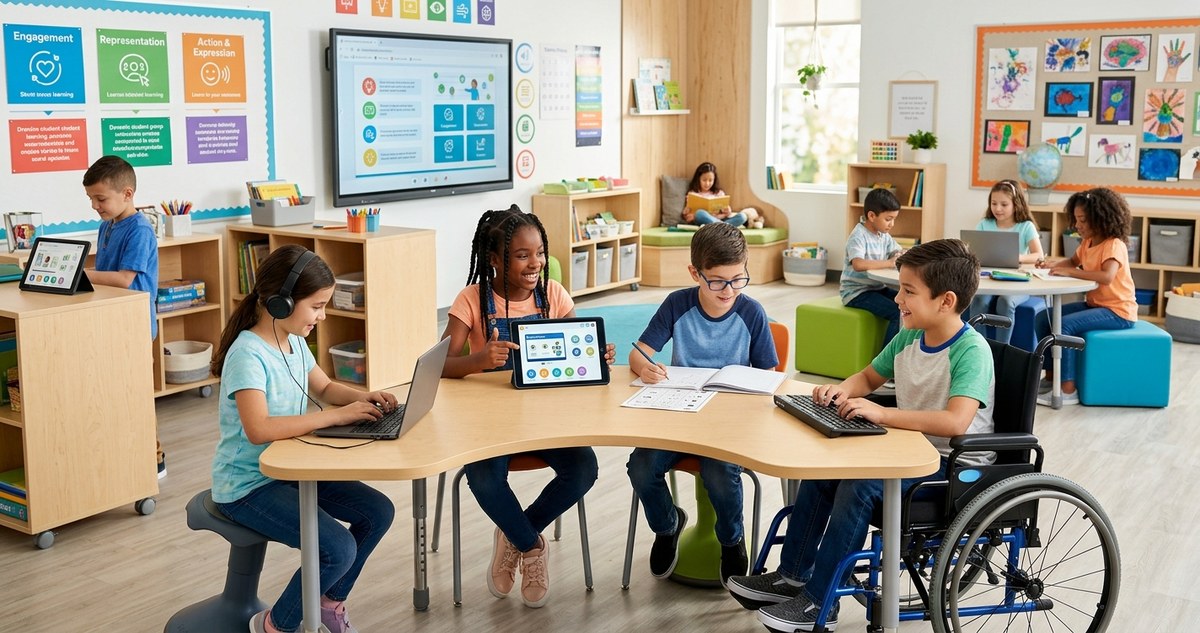
The space where students learn STEM sends a message. A sterile lab with old equipment and no student work on the walls says “this place is not yours.” Schools that have redesigned their STEM spaces to feel welcoming see measurable improvements in student engagement.
This does not require a million dollar renovation. Simple changes matter:
– Display student projects and photos of diverse scientists on the walls.
– Use flexible seating that allows collaboration.
– Ensure the lab is accessible to students with physical disabilities.
– Provide noise-canceling headphones for students with sensory needs.
Digital access is just as critical. In 2026, the homework gap is still real. Many students in low-income households do not have reliable internet at home. Schools that offer open lab hours before and after school, lend out hotspots, or provide offline versions of coding platforms remove a huge barrier. Learn more about how technology can bridge education gaps and promote equity in U.S. schools.
Create Clear Pathways from K-12 to College and Career
Students need to see a future in STEM. A middle schooler who loves building robots needs to know what class to take next year, what summer program to apply for, and what college major leads to that job. Too many programs exist in isolation. A student might attend a great summer camp but have no follow-up during the school year.
A practical numbered process for building a clear pathway looks like this:
- Map the full sequence. From elementary science to high school capstone courses, write down every STEM opportunity available in your district. Identify where students drop off.
- Create a STEM passport. Give each student a document that tracks their STEM experiences, badges, and completed courses. This builds momentum and pride.
- Partner with local colleges and employers. Dual enrollment programs let high school students take college STEM courses for credit. Internships with local companies show the real world application.
- Provide navigation support. Assign a counselor or advisor specifically for STEM pathways. This person helps students apply to programs, fill out financial aid forms, and connect to summer opportunities.
- Celebrate milestones publicly. Host a STEM signing day similar to athletic signing days. Recognize students who complete a pathway or earn a certification.
For more on how to structure these partnerships, check out how community partnerships can strengthen education equity efforts.
A Quick Reference on What to Avoid
Sometimes knowing what not to do is just as helpful. Here is a bulleted list of common missteps that well-meaning schools make:
- Relying on a single “diversity day” or assembly instead of embedding equity into the full curriculum.
- Offering STEM programs only as optional after-school activities that conflict with family responsibilities.
- Using expensive equipment that breaks and then cannot be replaced, leaving students with a broken promise.
- Ignoring implicit bias in how teachers call on students or assign group roles in lab settings.
- Focusing only on high school when the foundation for STEM identity is built in elementary school.
A Final Look at the Bigger Equity Picture
Expanding access to STEM is not just about filling seats in a classroom. It is about changing who gets to invent, design, and lead in the fields that shape our world. When a student from a low-income community becomes the first in their family to graduate with a computer science degree, that changes the economic trajectory of an entire household. When a school district closes the STEM participation gap, it sends a message to every student that their potential is not determined by their zip code.
The six strategies above are not a checklist to complete in a month. They are a continuous practice. Start with one. Pick the policy change that feels most achievable in your school, whether that is opening enrollment, training teachers in culturally responsive methods, or simply looking at your data with new eyes. Small wins build momentum.
If you are ready to go further, explore innovative approaches to closing education gaps for marginalized students and how schools can effectively address systemic barriers to education equity in 2026. The work is hard, but the results are worth every effort. Your students are waiting. Let us make sure the door is wide open.