elias
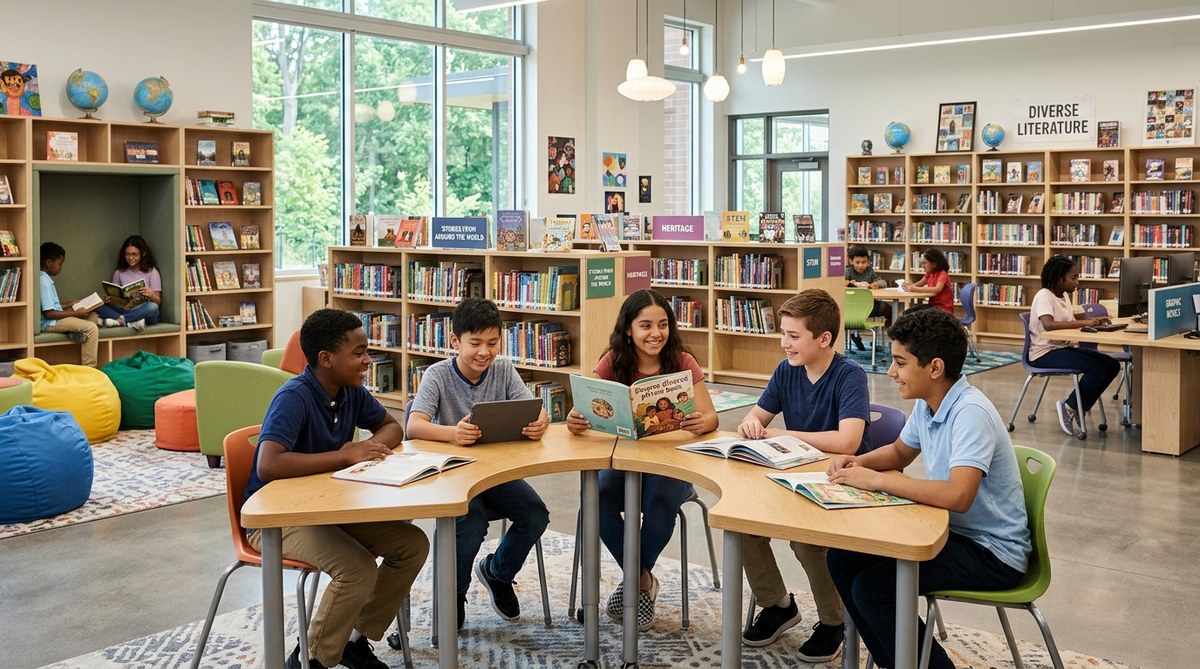
A student walks into the library and scans the shelves. Do they see faces like theirs? Do they read stories about families that look like their own? For too many kids, the answer is no. School libraries have long been filled with books that center on a narrow set of experiences. That leaves many students feeling invisible. In 2026, updating your collection is not just about being current. It is about equity. It is about making sure every child who walks through that door finds a mirror and a window. A mirror to see themselves. A window to see others.
Building diverse school library collections is a continuous process that requires intention, community input, and honest auditing. You do not need a massive budget. You need a clear plan, a commitment to representation across race, ability, family structure, and culture, and the courage to retire outdated titles. Start small, but start today.
Why Your Library Collection Needs a Refresh
The student body in most U.S. schools is more diverse than ever. Yet many library shelves still lean heavily on classic titles that feature mostly white, middle-class, able-bodied characters. That gap sends a quiet message. It tells some students that their stories are not as important.
An inclusive collection does more than check a box. It boosts reading engagement. It builds empathy. It supports literacy development for English language learners. When students see their own culture or family structure in a book, they are more likely to pick it up and keep reading. That is the foundation of a lifelong love of learning.
Start With an Honest Audit
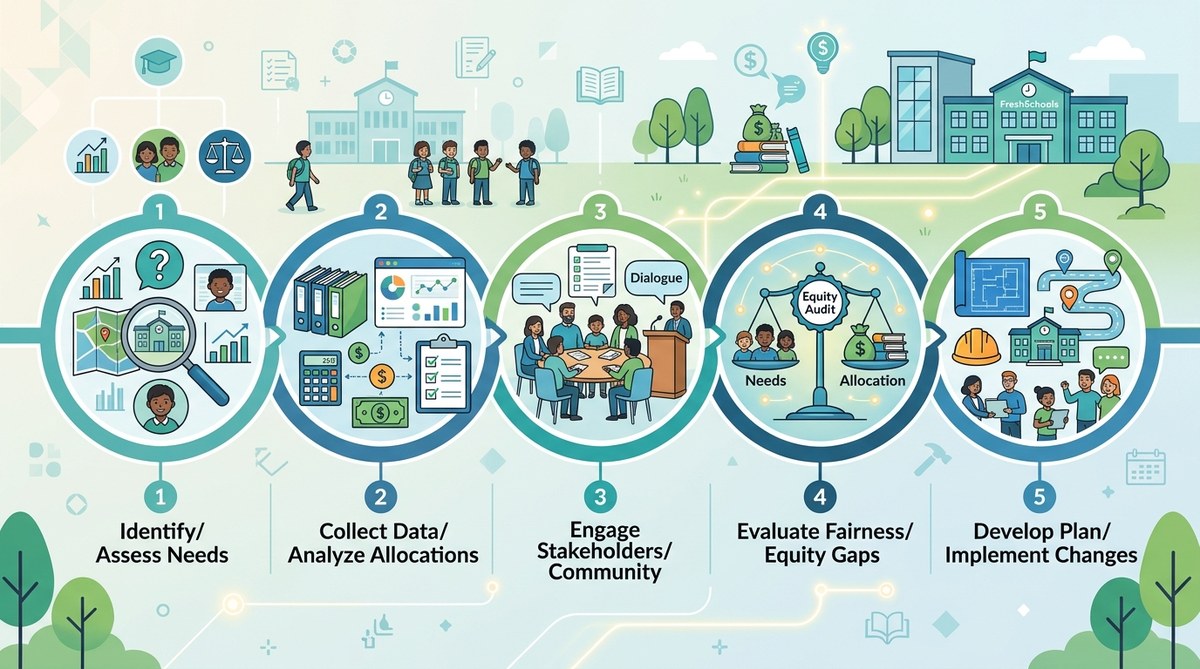
Before you buy a single new book, you need to know what you already have. An honest audit is the first step toward building diverse school library collections that actually serve your students.
Here is a simple process to follow:
- Pull a random sample of 100 books from your shelves. Include fiction, nonfiction, picture books, and chapter books.
- Categorize each book by the race or culture of the main character, the family structure shown, any disabilities represented, and the setting (urban, rural, suburban, international).
- Look for patterns. Are 80 percent of your main characters white? Do most families look like a mom and a dad? Are there any books with a main character who uses a wheelchair?
- Survey your students. Ask them: Do you see yourself in our library? What kind of stories do you wish we had? Use a simple Google Form or paper slip.
- Create a gap list. Write down exactly what is missing. This becomes your shopping list.
“If you do not audit your collection, you are flying blind. You might think you are diverse because you have one book about Diwali, but the rest of your shelves still tell a single story.” — School librarian, Portland Public Schools
What to Look For in New Titles
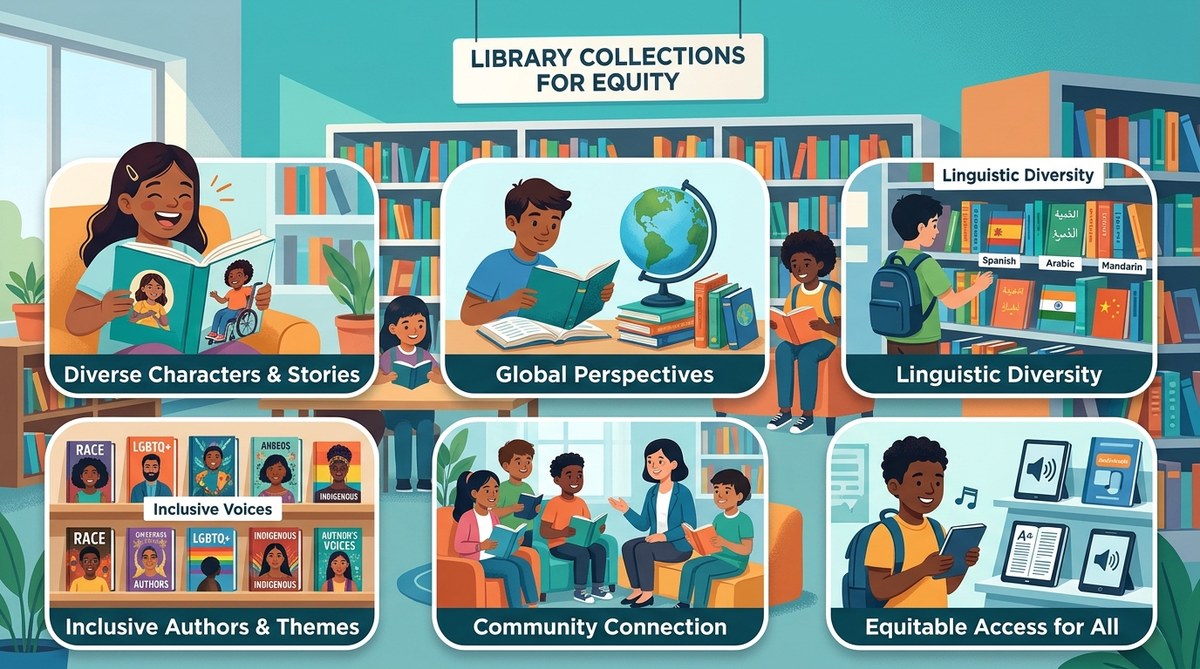
Once you know your gaps, you can start filling them. But diversity is not just about race. It is also about ability, family structure, language, and socioeconomic background.
Use this table to guide your purchasing decisions:
| Category | What to Look For | Common Mistake |
|---|---|---|
| Race & Culture | Books by own-voice authors. Stories set in non-Western countries. | Buying only trauma narratives about marginalized groups. |
| Family Structure | Single-parent homes, blended families, multi-generational homes, LGBTQ+ parents. | Assuming all families look like a nuclear unit. |
| Ability | Main characters with physical disabilities, learning differences, or neurodivergence. | Only including disability as a side plot or a problem to solve. |
| Language | Dual-language books, Spanish/English texts, stories that code-switch. | Only offering English-only books in a multilingual school. |
| Socioeconomic Class | Stories about kids living in apartments, experiencing food insecurity, or working jobs. | Only showing poverty as a problem to be fixed by a savior. |
Practical Steps to Redesign Your Collection
You have your audit. You have your list. Now it is time to take action. Here are six ways to redesign your school library collections to reflect student diversity and promote equity.
1. Diversify Your Non-Fiction Section
Non-fiction is often an afterthought. But it is a powerful place to show diverse contributions. Make sure your biography section includes scientists, artists, and activists from a wide range of backgrounds. Add books about the history of different cultures, not just during heritage months but all year long.
2. Prioritize Own-Voices Authors
Whenever possible, buy books written by authors who share the identity of the main character. An own-voices story about a Native American family will feel more authentic than one written by someone outside that community. Check the author’s note and about section before you purchase.
3. Retire Outdated or Harmful Books
Some older books contain stereotypes or outdated language. You do not have to throw them away. But you should move them off the main shelves. Create a separate professional collection for historical study. Talk to older students about why those books are problematic. Be transparent with your community about why you are making changes.
4. Include Books in Multiple Languages
If your school serves English language learners, add books in their home languages. Spanish, Arabic, Mandarin, Vietnamese, and Tagalog are common in many U.S. districts. Dual-language books are especially powerful. They let students read in their stronger language while building English skills.
5. Buy Books That Show Joy, Not Just Struggle
A common mistake is buying only books about hardship. Yes, students need to learn about the Civil Rights Movement. But they also need books about Black kids having fun at a family reunion. They need stories about disabled kids going on adventures. Representation should include joy, humor, and everyday life.
6. Involve Students in the Process
Let students help choose new books. Start a “diversity book club” that reviews potential purchases. Let them vote on new titles. When students feel ownership over the library, they use it more. They also tell their friends about the great books they found.
Common Pitfalls to Avoid
Even with good intentions, it is easy to make mistakes. Here are a few traps to watch out for:
- Tokenism: Do not buy one book about a culture and call it done. You need multiple books that show the depth and variety within any group.
- The single story: Avoid books that reduce a group to one experience. For example, do not only have books about Native Americans that focus on the past. Include books about contemporary Native life.
- Ignoring chapter books: Picture books are easier to diversify, but older students need representation too. Make sure your middle grade and YA sections are equally inclusive.
- Forgetting the adults: Teachers and staff also use the library. Include professional development books and adult fiction that reflect diverse perspectives.
How to Fund Your New Collection
Budget is always a concern. But there are creative ways to fund diverse school library collections without a huge line item in the budget.
- Apply for grants. Organizations like the American Library Association and We Need Diverse Books offer grants specifically for diversifying collections.
- Host a book drive. Ask families to donate gently used diverse books. Make a wishlist on a site like Bookshop.org or Amazon and share it with your community.
- Partner with the PTA. Many PTAs have funds for library resources. Present your audit data to show why this matters.
- Trade with other schools. If your school has duplicates, swap with a nearby school that has different gaps.
A Quick Reference: Techniques vs. Mistakes
Use this table as a cheat sheet when you are evaluating your collection.
| Technique | Why It Works | Mistake to Avoid |
|---|---|---|
| Audit your collection every year | Keeps you accountable | Only doing it once and never checking again |
| Buy own-voices books | Ensures authentic representation | Buying any book with a diverse character, regardless of author |
| Include many types of diversity | Reflects real student identities | Only focusing on race and ignoring ability or family structure |
| Let students help choose | Builds engagement and ownership | Making all decisions alone without student input |
Your Library as a Reflection of Your School
Your school library is one of the most visible parts of your building. It is where students go to learn, to dream, and to escape. When you intentionally build diverse school library collections, you are telling every student that they matter. You are also preparing all students for a world that is rich with different cultures, abilities, and ways of life.
This work does not happen overnight. It takes time to find the right books, to retire old ones, and to build a culture of inclusion. But every small step counts. Start with one shelf. Then move to the next.
The Ripple Effect of an Inclusive Library
When a student finds a book that feels like home, something shifts. They read more. They talk about the book with friends. They feel safer at school. Teachers notice the change. Parents see their kids excited about reading. The whole school culture becomes more welcoming.
That is the power of a well-curated collection. It is not just about books on a shelf. It is about building a community where every student belongs.
So take that first step. Grab a clipboard or a tablet. Walk your shelves. Look at what is there and what is missing. Talk to your students. Make a plan. And then start building the library that every kid in your school deserves.