elias

Your school district is struggling to attract and retain a diverse workforce. You have tried job fairs, updated your recruitment materials, and even hired a diversity recruiter. Yet when you look at your teacher demographics, the numbers barely budge.
Something is not working. The problem is likely hiding inside your hiring pipeline itself.
A school district hiring equity audit helps you find those hidden barriers. It shows you exactly where bias creeps in, from the moment a job is posted to the final offer letter. And once you see those gaps, you can fix them.
A hiring equity audit is a structured review of your district’s full recruitment and promotion lifecycle. It uses data to uncover where bias enters the process. The goal is not blame. It is action. When you identify hidden equity gaps, you can make targeted changes that build a more diverse, qualified, and stable workforce for your students.
Why your district needs a hiring equity audit
Most school leaders want fair hiring. They believe their processes are objective. But research shows that bias operates below the surface. It hides in job descriptions that use masculine coded language. It hides in referral networks that pull from the same small pool. It hides in interview rubrics that reward polish over potential.
An audit gives you a mirror. It shows what is actually happening, not what you hope is happening. For example, you might find that candidates from certain backgrounds are consistently screened out at the resume review stage. Or that internal candidates for leadership roles are almost all white, even though your teacher corps is diverse.
Without an audit, you are guessing. With one, you can act.
What a school district hiring equity audit covers
A thorough audit looks at every stage of the employee lifecycle. Here is what you should examine:
- Job posting language and distribution channels
- Resume screening criteria and software filters
- Interview panel composition and question consistency
- Selection and offer stage data
- Onboarding and first year retention rates
- Internal promotion and leadership pipeline data
Each stage can introduce bias. The goal is to measure it, understand it, and remove it.
Common equity gaps hiding in your pipeline
Some gaps are obvious once you look. Others are subtle. The table below compares typical practices with their hidden equity impacts.
| Common Practice | Hidden Equity Gap | Better Approach |
|---|---|---|
| Posting jobs only on district website and a few major boards | Misses candidates from HBCUs, Hispanic Serving Institutions, and local community networks | Use targeted outreach to diverse educator programs and community organizations |
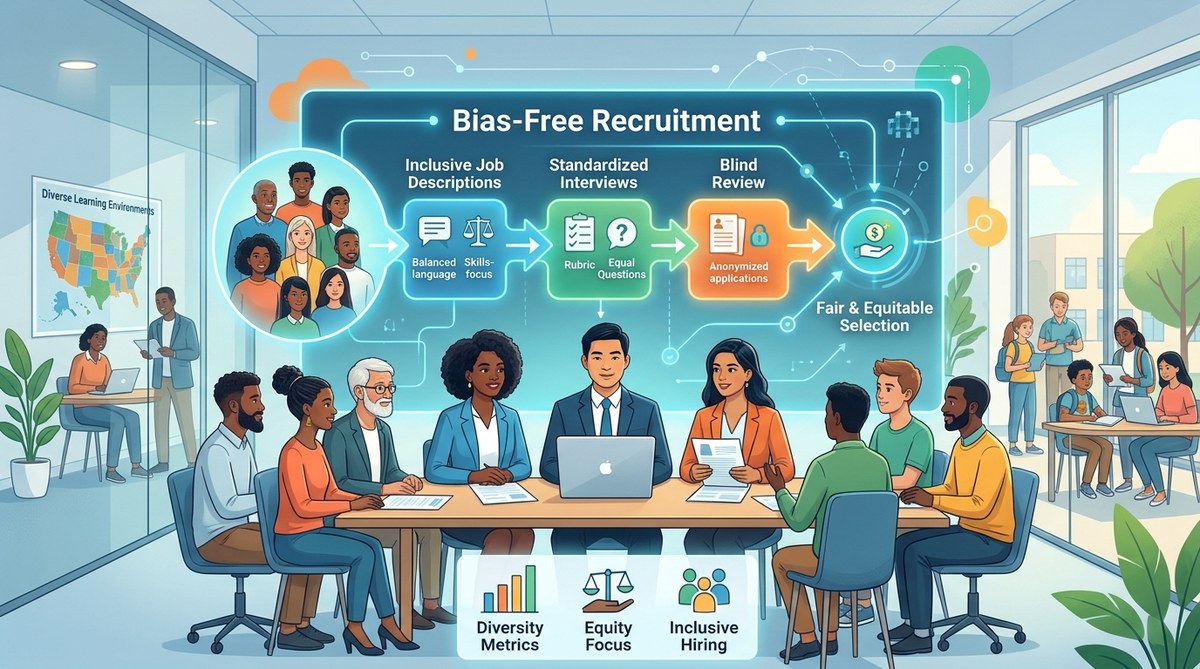
| Screening resumes with keyword filters | Filters out candidates with nontraditional but relevant experience | Use blind resume review or competency based screening |
| Using unstructured interviews | Allows interviewer bias to influence scoring | Use structured, behavior based questions with a scoring rubric |
| Relying on current staff referrals | Replicates existing demographics | Expand referral networks and offer referral bonuses for diverse candidates |
| Promoting from within without a formal process | Overlooks qualified candidates who lack internal connections | Create a transparent, posted promotion pathway with mentorship |
“The most dangerous bias is the one you do not see. An audit forces you to look at your own process with fresh eyes. That is where real change begins.” — Dr. Maria Santos, district equity consultant
A 6 step process for your hiring equity audit
Follow these steps to run your own audit. You can adapt the scope based on your district size and resources.
- Assemble your audit team. Include HR staff, a data analyst, a teacher representative, and a community member. Consider bringing in an outside facilitator to ensure objectivity.
- Map your current process. Document every step from job requisition to offer acceptance. Note where decisions are made and who makes them.
- Collect disaggregated data. Gather data by race, gender, and other relevant factors for each stage. You need applicant flow data, interview rates, offer rates, and acceptance rates.
- Analyze for disparities. Compare representation at each stage. Use simple percentages first. For example, if 40% of applicants are teachers of color but only 20% of interviewees are, you have a screening gap.
- Identify root causes. Look for policies, practices, or unwritten rules that cause the disparity. Is it the screening software? The interview location? The time of day for interviews?
- Create an action plan. Prioritize the gaps you can fix most easily. Set measurable goals and a timeline. Assign ownership and report progress publicly.
Techniques to use and mistakes to avoid
| Technique | Why It Works | Common Mistake | Why It Fails |
|---|---|---|---|
| Blind resume review | Removes name and school from initial screen | Using only one reviewer | Introduces individual bias |
| Structured interview rubric | Ensures all candidates are judged on same criteria | Not training interviewers on the rubric | Rubric is ignored in practice |
| Diverse interview panels | Candidates see themselves represented | Panel members are not given equal voice | Dominant voices still drive decisions |
| Tracking applicant flow data | Shows where candidates drop off | Only tracking final offers | Misses early stage filtering |
How to use your audit results
An audit is only useful if you act on it. Start with the easiest fixes. Rewrite job descriptions to be more inclusive. Change your screening criteria. Train your interview teams.
Then move to harder changes. Redesign your promotion process. Create a paid internship program for aspiring teachers of color. Partner with local colleges that serve diverse populations.
Track your progress. Run the audit again in 12 months. Compare the data. If the numbers improve, celebrate that. If they do not, dig deeper.
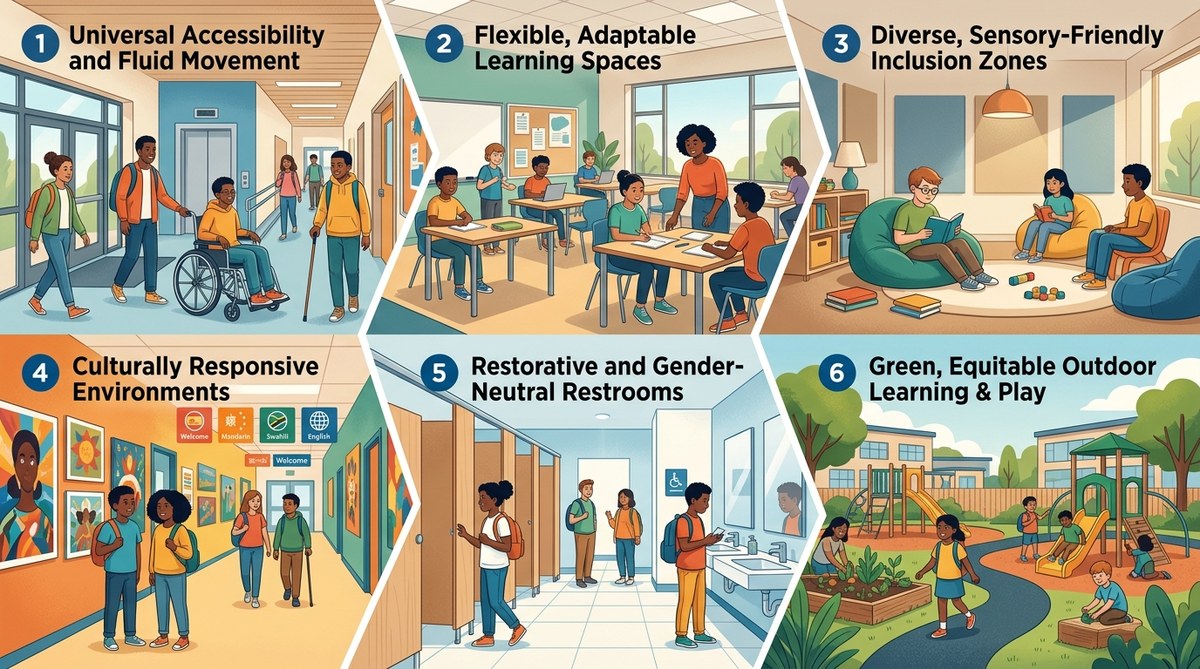
For more on building an inclusive environment once you hire, read about strategies to promote inclusive education for all students. And if you are looking at broader policy changes, check out building school policies that support child wellbeing and equity.
Turning insight into lasting change
A school district hiring equity audit is not a one time event. It is a practice. It is a commitment to looking at your own process with honesty and courage. The data will tell you where you are falling short. But it will also show you where you can improve.
Your students deserve teachers who reflect their experiences and their potential. Your community deserves a school system that hires fairly. And your district deserves a workforce that is strong, diverse, and ready to meet the challenges of 2026 and beyond.
Start your audit this month. Gather your team. Map your process. Look at the data. And then take the first step toward a more equitable future for everyone in your district.