elias
elias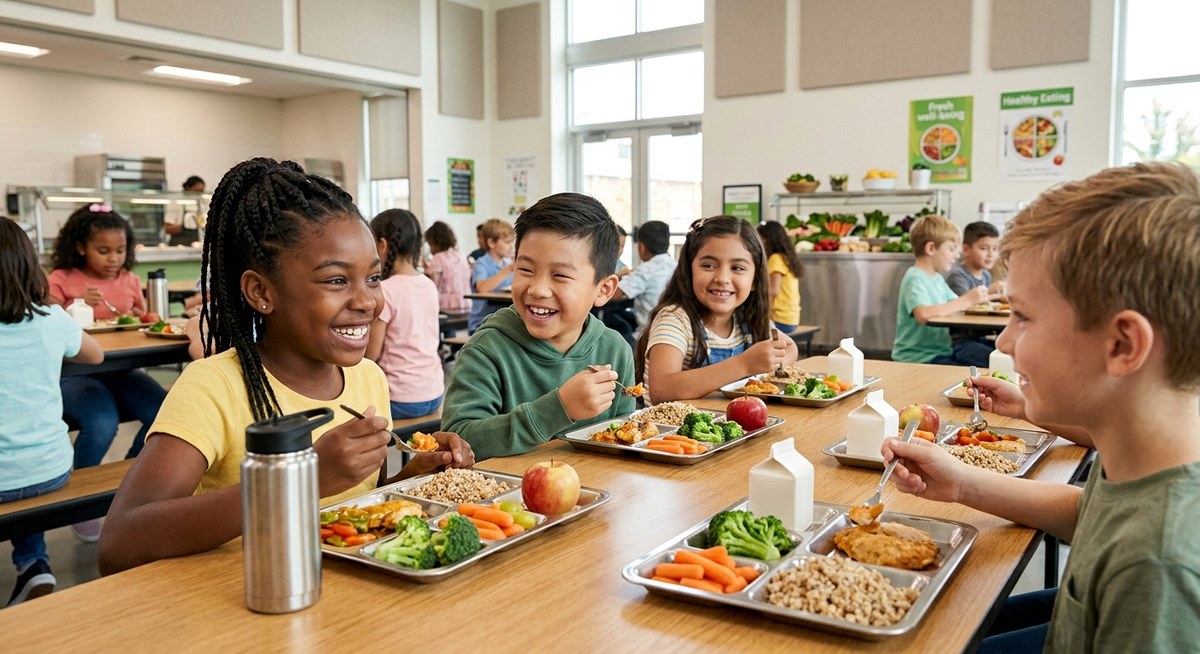
Every morning, millions of children walk through school doors with empty stomachs. They sit at desks, open their notebooks, and try to focus on math problems or reading passages. But hunger makes that nearly impossible. For years, educators and researchers have known that nutrition affects learning. The question is not whether food matters in the classroom. The question is how we design school lunch programs to close gaps and lift performance for every student.
The evidence is clear. When students have reliable access to nutritious meals, their attendance improves, their behavior stabilizes, and their test scores rise. But not all lunch programs are created equal. Some schools still struggle with stigma, funding shortfalls, and uneven quality. The schools that get it right are seeing real results. Here is what the research says and how you can apply it.
Equitable school lunch programs do more than feed children. They directly improve academic performance by reducing absenteeism, boosting concentration, and closing achievement gaps between low-income students and their peers. Research from 2026 shows that schools with universal free meal policies see measurable gains in math and reading scores, especially among students who previously faced food insecurity. For policymakers and school leaders, investing in equitable nutrition is one of the most cost effective ways to raise outcomes for all students.
The Direct Link Between Nutrition and Learning
Your brain runs on fuel. When a student skips breakfast or eats a low quality lunch, their blood sugar drops. They get tired. They get irritable. They struggle to remember what the teacher just said. This is not a theory. This is biology.
Several large scale studies have tracked the impact of school meals on cognitive function. A 2025 meta-analysis from the Journal of School Health found that students who participated in free or reduced price lunch programs scored an average of 8 to 12 percentile points higher on standardized math assessments compared to eligible non participants. Reading scores showed similar gains.
Why does this happen? Three key reasons stand out:
- Improved attention span: Proper nutrition helps students stay focused during afternoon instruction, which is often when challenging subjects are taught.
- Reduced absenteeism: Children who eat regular school meals have fewer sick days and are less likely to miss class due to hunger related issues.
- Better classroom behavior: Well fed students show fewer disciplinary incidents, which means more time on task for everyone.
These factors compound over time. A student who attends school more often, pays attention better, and behaves well will naturally learn more. That is the foundation of the school lunch programs academic performance connection.
How Inequity Shows Up in the Cafeteria
Not every child experiences the lunch line the same way. In many districts, students who qualify for free or reduced price meals must use a separate line or a special card. Other students see this. They know who is getting a free meal and who is paying. This stigma can be crushing.
Research from the Food Research and Action Center in 2024 showed that up to 15 percent of eligible students do not participate in meal programs because they feel embarrassed or singled out. Those students often go hungry during the school day. And hunger does not discriminate by subject. It hurts performance in every class.
Inequity also shows up in meal quality. Schools in wealthier districts can afford fresher ingredients, salad bars, and culturally diverse options. Schools in underfunded areas often rely on processed foods that are high in sugar and low in nutrients. That gap in meal quality mirrors the achievement gap.
When we talk about closing education gaps, we have to talk about what happens at lunchtime. For a deeper look at how school environments affect child health and learning, read more about the role of school environments in promoting child health and learning success.
What Makes a School Lunch Program Equitable?
An equitable lunch program does not just feed kids. It feeds all kids with dignity and quality. Here are the core features that define an equitable program:
| Feature | What It Looks Like | Common Mistake to Avoid |
|---|---|---|
| Universal free meals | Every student eats without application or payment | Means testing that creates stigma |
| High nutritional standards | Fresh fruits, vegetables, whole grains, lean proteins | Relying on processed, high sugar items |
| Culturally responsive menus | Meals that reflect students’ backgrounds and dietary needs | Serving the same bland options every day |
| Adequate time to eat | At least 20 minutes of seated lunch time | Rushing students through a 15 minute window |
| No lunch shaming | All students treated equally regardless of balance | Publicly identifying students with debt |
Schools that adopt these practices see immediate changes. Attendance rates climb. Nurse visits for stomach aches and headaches drop. Teachers report fewer mid afternoon slumps.
“We saw a 14 percent increase in math proficiency within two years of switching to universal free meals. The biggest gains came from students who had been chronically absent before.”
Dr. Marisol Reyes, Superintendent of Westbrook School District, 2026
A Step by Step Plan to Improve Your Lunch Program
If you are a policymaker or administrator looking to strengthen your school lunch programs academic performance impact, here is a practical process to follow.
-
Audit your current program. Look at participation rates by grade, demographic group, and meal type. Identify gaps. Are certain students opting out? Are some meals going uneaten?
-
Survey students and families. Ask directly about stigma, food preferences, and barriers. Use anonymous forms. You might discover that students avoid the lunch line because they do not like the options or feel embarrassed.
-
Pilot universal free meals in one or two schools. Apply for Community Eligibility Provision (CEP) funding if your district qualifies. Measure attendance, discipline referrals, and test scores before and after the pilot.
-
Upgrade your kitchen capacity. Work with local food suppliers or nonprofits to bring in fresher ingredients. Consider salad bars, build your own taco stations, or culturally relevant entrees.
-
Train cafeteria staff on dignity and inclusion. Every adult in the lunchroom should understand how their words and actions affect students. No raised voices about debt. No separate lines.
-
Track outcomes over at least two years. Academic gains from nutrition interventions take time. Do not expect a miracle in one semester. But after two years, the data will speak.
For more on how to build policies that support student wellbeing, check out this guide on building school policies that support child wellbeing and equity.
The Funding Challenge and How to Solve It
Money is the biggest barrier to equitable lunch programs. Many districts operate on tight budgets. The federal reimbursement rate for free meals often does not cover the full cost of preparing fresh food. But there are solutions.
Many schools have partnered with local farms through farm to school programs. These partnerships reduce costs and improve quality. Others have applied for grants from organizations like the USDA Farm to School Grant Program or private foundations focused on child nutrition.
Another option is to bundle lunch program improvements with broader school health initiatives. When nutrition is part of a larger strategy around student wellness, it is easier to justify funding. For a model of how this works, see our article on implementing effective school health programs to boost student well being.
Community partnerships can also fill gaps. Local food banks, grocery stores, and restaurants sometimes donate surplus food or offer discounted pricing. A strong partnership network can stretch a lunch budget further than you might expect.
Why This Matters More in 2026
The economic landscape in 2026 continues to put pressure on families. Inflation has stabilized, but many households still struggle with food costs. The pandemic era waivers that expanded free meal access have expired in most states. Some districts have rolled back universal programs.
At the same time, the research on school lunch programs academic performance has never been stronger. We know that every dollar spent on school meals returns multiple dollars in improved student outcomes and reduced healthcare costs. We know that closing the nutrition gap is one of the fastest ways to close the achievement gap.
For schools serving high poverty populations, equitable lunch programs are not a luxury. They are a necessity. If you are looking for more evidence on how to reduce gaps, read about 7 proven strategies for reducing achievement gaps in diverse classrooms.
The Ripple Effect on the Whole School Community
When a school commits to equitable lunch programs, the benefits extend beyond test scores. Teachers report less stress because students are calmer and more ready to learn. Nurses see fewer visits for hunger related complaints. Parents feel more connected to the school because they know their children are cared for.
There is also a social emotional benefit. When all students eat the same meal in the same way, it breaks down class barriers. Kids stop sorting each other by who gets free lunch and who does not. That sense of belonging matters. It makes students feel safe. And students who feel safe learn better.
For a broader view of how inclusive environments drive success, take a look at creating inclusive learning spaces that foster student engagement.
A Call to Action for School Leaders
You do not need to overhaul your entire district overnight. Start small. Pick one school. Run a universal meal pilot for one year. Collect the data. Show the results. Then expand.
The research is on your side. The students are waiting. And the solution is already in your cafeteria. You just need to make it equitable.
Every child deserves a fair chance to learn. That chance starts with a full stomach and a dignified lunch line. Let us build that together.