elias
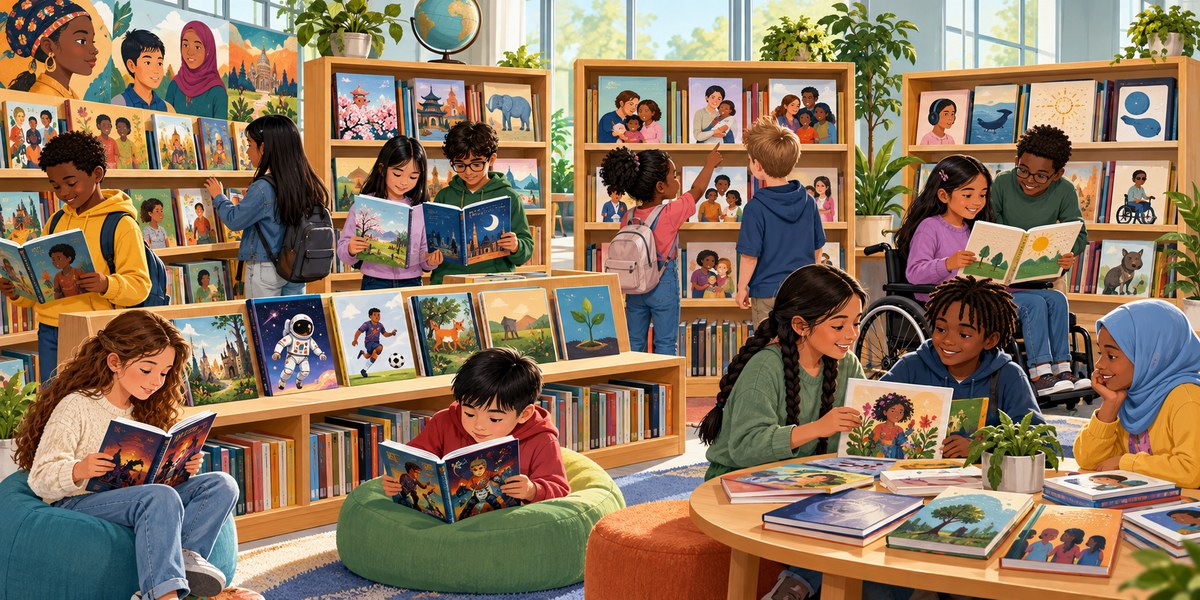
When a student walks into your library and sees a book cover that reflects their own face, their family, or their neighborhood, something clicks. They feel seen. They feel safe. That moment of recognition can turn a reluctant reader into a lifelong learner. But building a collection that serves every student in your building takes more than good intentions. It takes a plan.
Diverse school library collection strategies are not about tossing out your current books. They are about intentional growth. You can audit your current collection, involve students in selection, and use inclusive cataloging to make every reader feel welcome. The goal is equity, not just representation. A balanced collection helps close opportunity gaps and builds a community of belonging.
Start With an Honest Audit
You cannot fix what you have not measured. Before you add a single new title, take a hard look at your current shelves. Pull a random sample of 100 books from different sections. Then ask yourself a few questions.
- How many feature a main character from a marginalized racial or ethnic group?
- How many are written by authors of color?
- How many portray characters with disabilities, neurodivergence, or diverse family structures?
- How many are translated works from outside the United States?
Write down the numbers. This is your baseline. Share the results with your principal or your school’s equity team. You might also want to read about strategies to promote inclusive education for all students to see how your library fits into the bigger picture.
A good audit does not stop at counting covers. Look at the roles characters play. Are Black characters always in supporting roles? Are Latinx families shown only in stories about immigration? These patterns tell a story of their own. You want a collection where every group appears in a full range of human experiences: joy, adventure, mystery, humor, and everyday life.
Move Beyond the “One Book” Approach
Many librarians fall into a trap. They add one book about a Native American character, one book about a child with a physical disability, and call the job done. That is not equity. That is a checkbox.
Equity means depth. If you have a shelf of 30 fantasy novels and only one features a Black protagonist, that is not enough. You need multiple titles so students can choose based on interest, not just identity.
Think about it this way. A white student can walk into most libraries and find dozens of books where characters look like them. That same choice should exist for every student. Aim for at least 20 to 30 percent of your collection to feature characters from underrepresented groups. That number gives students real options.
Here is a table that shows common mistakes and better approaches.
| Common Mistake | Better Approach |
|---|---|
| Buying one “multicultural” book per grade level | Curating multiple titles across genres for each group |
| Focusing only on race | Including disability, neurodiversity, LGBTQ+ identities, and socioeconomic diversity |
| Selecting books that focus on hardship or trauma | Choosing stories that show joy, adventure, and everyday life |
| Relying on award lists only | Including books from small presses and independent authors |
| Ignoring the nonfiction section | Adding diverse biographies, science books, and history titles |
Let Students Lead the Way
Your students are the best experts on what they want to read. Set up a student advisory group for the library. Meet once a month during lunch or after school. Ask them what they are looking for. Let them suggest titles.
One middle school librarian in Texas did this and discovered that her students wanted more graphic novels featuring characters of color. She added titles like “New Kid” by Jerry Craft and “When Stars Are Scattered” by Victoria Jamieson. Circulation in that section tripled.
You can also run a simple survey. Ask students to name a book where they felt the main character was “someone like me.” Then ask them to name a book where they learned about a life very different from their own. The answers will show you gaps in your collection.
“A truly diverse collection does not just hold a mirror up to the reader. It also holds a window open to the world.” — Dr. Rudine Sims Bishop
That quote from Dr. Bishop captures the whole point. Mirrors and windows. Every student deserves both.
Use Cataloging to Make Diversity Findable
You can have the most diverse collection in your district, but if students cannot find those books, they might as well not exist. Rethink how you tag and display your materials.
Here are a few ways to do that.
- Add subject tags for cultural identity, family structure, disability, and neurodiversity in your catalog system.
- Create a “Mirrors and Windows” book display that changes every month.
- Use shelf talkers (small signs) that highlight why a book offers a unique perspective.
- Build a section called “Stories from Around the World” with books in translation.
- Include a “Read the World” challenge where students track how many countries or cultures they explore through reading.
When you catalog by topic rather than by author last name, you make it easier for students to self-select. This is one of the most practical diverse school library collection strategies because it works with your existing system.
If your school is thinking about creating inclusive learning spaces that foster student engagement, the library is the perfect place to start.
Invest in Professional Development for Yourself
You are the gatekeeper of the collection. That means your own knowledge matters. Set aside time to learn about diverse authors, publishers, and trends in children’s literature.
Here is a short list of resources to get started.
- We Need Diverse Books (wndbooks.org)
- The Horn Book’s “Talking Equity” series
- The American Library Association’s “Great Stories Club”
- School Library Journal’s “Diverse Books” columns
- Cooperative Children’s Book Center (CCBC) statistics
You do not have to read everything at once. Pick one resource and commit to reading one article per week. Over a school year, that adds up to 36 new insights about your collection.
Attend a conference session on diversity in children’s literature. Many state library associations now offer scholarships for this type of professional development. Bring what you learn back to your team and share it.
Redesign Your Physical and Digital Displays
A diverse collection needs a diverse face. Look at the posters, signage, and digital images in your library. Do they show a variety of families, abilities, and cultures? If not, update them.
Put books with diverse characters at eye level. Do not hide them on a bottom shelf labeled “Multicultural.” Mix them in with your regular displays. A student browsing the mystery section should see diverse authors next to Agatha Christie.
In your digital library, create curated lists. “Spooky Stories by Black Authors.” “Sci Fi with Disabled Heroes.” “Graphic Novels About Immigrant Families.” These lists help students find what they want fast.
If you are looking for more ideas on how to foster child-centered learning environments that enhance equity, your library displays are a powerful starting point.
Build Relationships With Local Community Partners
Your library does not have to do this alone. Reach out to your local public library, a nearby university, or a community cultural center. They often have resources, book lists, or even book donations that can supplement your collection.
Invite local authors of color to do virtual visits. Many are happy to do a 15-minute Q&A with students. That personal connection makes students want to read that author’s books.
You can also partner with your school’s PTA or a local nonprofit to fund a “diverse books grant.” Write a short proposal explaining the need. Many parents want to support equity work but do not know how. Give them a clear way to help.
A Step-by-Step Process for the Year
If you are feeling overwhelmed, start small. Here is a six-month plan that any librarian can follow.
- Month one: Conduct your audit and share results.
- Month two: Form a student advisory group and run a survey.
- Month three: Buy 10 to 15 new titles based on student input.
- Month four: Update your catalog tags and create new displays.
- Month five: Attend a workshop or read three articles on diverse literature.
- Month six: Host a community event or author visit.
That is six months of steady, manageable progress. You do not need to buy 200 books at once. You just need to start.
Your Library Can Change Lives
The research is clear. When students see themselves in books, they read more. When they read more, their academic outcomes improve. And when the library feels like a place that belongs to everyone, the whole school culture shifts.
You have the power to make that happen. Start with your audit. Listen to your students. Buy with intention. Tag with care. Display with pride.
And remember that how schools can effectively address systemic barriers to education equity in 2026 often begins in places like the library. Your work matters.
So take a deep breath. Pick one strategy from this guide. Try it this week. Then try another next month. Before you know it, your library will be a place where every student feels like they belong. That is the goal. That is the work. And you are exactly the right person to do it.