elias
elias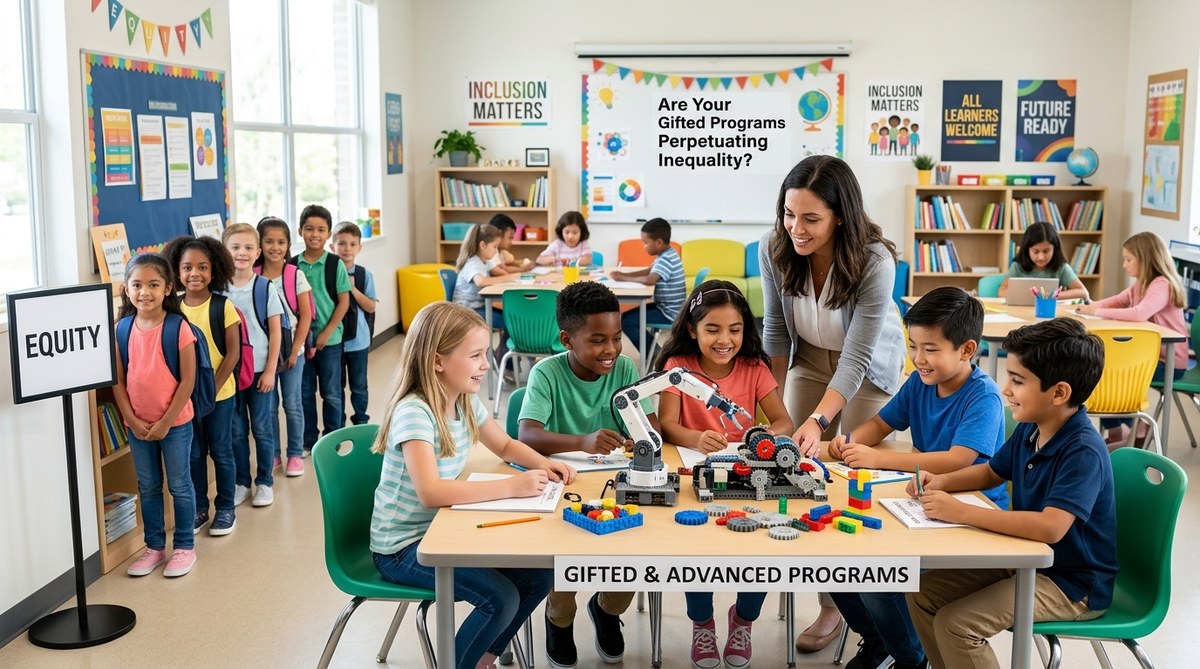
Of the many tools meant to nurture bright young minds, gifted and talented programs stand out as both a promise and a paradox. Their promise is simple: give advanced learners the challenge they need. The paradox is that, for decades, these programs have often excluded the very students who could benefit most. As a result, the term “gifted programs inequality” now defines a central debate in American education. School leaders across the country are asking whether these programs do more harm than good.
Gifted programs inequality stems from biased identification methods, resource disparities, and rigid tracking. These systems often overlook talented students from low-income families and communities of color. However, schools can shift toward equitable models, such as universal screening and schoolwide enrichment, that celebrate diverse strengths without sorting kids into separate tracks. Lasting change requires honest audits and community collaboration.
The Real Cost of Gifted Programs Inequality
Consider this: a child born into a family with money often has access to enrichment outside school. That student arrives in kindergarten already familiar with advanced vocabulary and reasoning games. A child from a less privileged background may show the same raw potential but never get the chance to demonstrate it on a standardized test. Gifted programs, designed to catch exceptional ability, end up catching mostly those with opportunity. This pattern has been documented for years. In 2026, it remains one of the most stubborn barriers to true educational equity.
When gifted programs inequality is left unchecked, it sends a damaging message. Students who are not selected may feel that their intelligence is not valued. Teachers may lower expectations for entire classrooms. Meanwhile, the students who do get into gifted tracks often come from a narrow slice of the population. Data from large urban districts shows that Black and Hispanic students are consistently underrepresented in gifted classes, while white and Asian students are overrepresented. This is not a reflection of innate ability. It is a reflection of how we define and measure giftedness.
How Selection Processes Reinforce Gaps
Most schools rely on a combination of teacher referrals, parent requests, and test scores to decide who gets into advanced classes. Each of these steps can introduce bias. A teacher might see a quiet student who never raises his hand and assume he is not ready for gifted work, even if he solves problems quickly in his head. A parent who works two jobs may not know that a referral form exists. A test written in formal English can trip up a student who speaks a different dialect at home.
The table below shows how common identification methods often favor students with privilege:
| Identification Method | How It Works | Common Bias |
|---|---|---|
| Teacher referral | Teachers nominate students they think are gifted | Teachers may mistake compliance for ability; implicit bias can lead to under referral of Black and Latino students |
| Standardized test scores | Students above a cutoff get into the program | Tests measure prior knowledge and test taking skills, not raw potential; wealthier students often have test prep |
| Parent nomination | Parents request that their child be tested | Families with time, English fluency, and awareness of the process are more likely to nominate their child |
| Portfolio review | Students submit work samples | Portfolios can be coached or curated by parents; uneven quality of assignments across classrooms |
| Universal screening | All students are tested at a certain grade | More equitable, but still relies on a single test that may be culturally biased |
The pattern is clear. Without universal screening and multiple measures, gifted programs inequality is almost guaranteed.
Signs That Your Gifted Program May Be Perpetuating Inequity
Here are some warning signs for educators and policymakers to watch for:
- Your gifted population does not reflect the racial or economic diversity of your school district.
- The referral process relies heavily on parent requests or teacher nominations without clear rubrics.
- Students from low income families are rarely, if ever, identified for advanced classes.
- Your district tracks students into separate classrooms rather than using flexible grouping.
- There is no system for re evaluating students after they miss the initial cutoff.
- Professional development on equity and gifted education is rare or nonexistent.
“We have to stop thinking of giftedness as a fixed trait that some children have and others don’t. When we broaden our definition, we see brilliance everywhere. The question is not whether a child is gifted. The question is whether we are ready to develop the gifts they bring.” — Dr. Elena Rosario, author of Rethinking Advanced Academics.
What Schools Are Doing in 2026
A growing number of districts are moving away from traditional pull out gifted programs. Instead, they are adopting schoolwide enrichment models that provide advanced learning opportunities for all students. In this model, every student gets exposure to higher order thinking, creative problem solving, and project based learning. Those who show particular interest or ability in a subject can go deeper without being pulled into a separate class.
Other districts have started using a “local norms” approach. Instead of comparing students to a national percentile, they compare them to other students in their own school. This helps identify high achieving students within a school that may have lower overall test scores, uncovering talent that would otherwise be missed. For example, a student who scores in the 70th percentile nationally might be in the top 10 percent of his own school, and with proper support, can thrive in advanced work.
These changes are not easy. They require training for teachers, updates to curriculum, and buy in from families who worry that their child will lose opportunities. But the evidence suggests that when done right, inequity decreases without harming higher achieving students. For more on how to approach these shifts, see strategies to promote inclusive education for all students.
Practical Steps Toward Fairer Advanced Classes
If you are an educator or policymaker looking to address gifted programs inequality, here is a process to follow:
- Audit your current program. Collect data on who is identified, who is retained, and who graduates from advanced tracks. Break it down by race, income, language status, and special education status. Share the results with your community.
- Review your identification criteria. Remove barriers like parent nomination requirements and single test cutoffs. Introduce multiple measures, including nonverbal ability tests and local norms.
- Provide professional development. Train all teachers on how to recognize advanced potential in students who may not fit the traditional mold. Focus on tools like talent spotting and dynamic assessment.
- Adopt flexible grouping. Instead of permanent tracks, use fluid groups that change based on subject and skill level. This allows students to move between groups as they grow.
- Add enrichment for everyone. Expand access to critical thinking puzzles, literature circles, and hands-on STEM projects in the general classroom. When all students are challenged, the need for a separate gifted label decreases.
- Monitor and adjust. Review your data each year. If gaps persist, dig deeper into why. Talk to families, observe classrooms, and adjust your strategies.
For a deeper look at how policy shapes these outcomes, read our guide on building school policies that support child wellbeing and equity.
Supporting Students Who Were Overlooked
Even when we fix the system for tomorrow, we must not forget the students who were missed yesterday. Many high school students with untapped potential were never identified in elementary school. For them, catching up to grade level content can feel impossible, let alone accessing advanced classes. Schools can create bridge programs that prepare these students for honors, AP, or IB courses by the time they reach high school.
One powerful approach is to use data from state tests and teacher observations to invite students into summer enrichment or after school academies. These programs can build confidence and academic skills in a supportive environment. For examples of how this works in practice, check out innovative approaches to closing education gaps for marginalized students.
Another key piece is mentoring. Students who are first in their family to consider advanced coursework often benefit from a teacher or counselor who walks them through the process of enrolling. Simple steps like helping with course requests or explaining the benefits of AP credit can make all the difference.
Building a Future Where Every Student Thrives
Gifted programs do not have to be synonymous with inequality. The goal is not to eliminate challenge for high achieving students. Instead, it is to make sure that every student who shows promise gets the chance to develop it. That means rethinking who we call gifted, how we find them, and how we serve them.
In 2026, schools that take this work seriously are seeing results. They report more diverse advanced classes, higher engagement among all students, and stronger community trust. They also find that when they stop sorting kids so early, they start seeing brilliance they missed before.
If your school is ready to examine its own practices, start with a simple audit. Talk to your students and families. Ask hard questions. Then take one step toward a more equitable model, whether that is universal screening, flexible grouping, or rich enrichment for every classroom. The students are waiting. And they are more capable than our current systems give them credit for.
For ongoing support, visit our resource on empowering educators to advance educational equity in diverse classrooms. Change starts with a single conversation. Let it start today.