elias
elias
The kindergarten doors open in August, and the differences are already visible. One child knows every letter of the alphabet. Another can barely hold a crayon. One child has heard 30 million words. Another has heard far fewer. These gaps are not random. They reflect a system that has never been truly equal. But here is the good news: when we invest in early childhood education equity, we give every child a fair start. And that fair start echoes through every grade, every test score, every graduation. This is not a theory. It is a growing body of evidence that shapes how we design schools, allocate funding, and prepare teachers. If you are an educator, policymaker, or advocate who wants to close opportunity gaps, the early years are your most powerful lever.
Early childhood education equity is not just about preschool access. It means high quality, culturally responsive, well funded early learning experiences for every child, regardless of zip code or income. When we build those experiences, children gain cognitive, social, and emotional skills that predict third grade reading, high school graduation, and career success. Equity in the early years is the foundation for long term school equity.
Why the First Five Years Shape Everything
Brains grow faster between birth and age five than at any other time. Neural connections form at a rate of more than one million per second. This is when language, self regulation, and curiosity take root. Children who experience stable, nurturing environments develop stronger executive function. They learn to manage frustration, follow directions, and interact with peers. Children who face chronic stress, poverty, or trauma often develop a different brain architecture. Their bodies stay in survival mode.
That difference does not disappear when they start kindergarten. It shows up in reading readiness, in behavior referrals, and in referrals to special education. Early childhood education equity means closing these gaps before they become permanent.
Research from the HighScope Perry Preschool Study and the Abecedarian Project shows that high quality early childhood programs boost outcomes for decades. Participants had higher earnings, better health, and lower rates of incarceration. The return on investment is estimated at 7 to 10 percent per year through reduced social costs and increased productivity. But that return depends on equity. Programs must reach the children who need them most.
The Reality of Unequal Access
In the United States today, access to quality early childhood education is still deeply uneven. Families in wealthy suburbs often have multiple options: Montessori, Reggio Emilia, play based programs. In low income neighborhoods, high quality slots are scarce. Many families rely on unlicensed care or relatives. Head Start serves only about a third of eligible children. State funded pre K reaches about 6 percent of four year olds. And even when programs exist, they do not always meet the same standards.
The result is a two tier system. A child from a high income family enters kindergarten with a vocabulary of 20,000 words. A child from a low income family may know only 5,000. That gap is not about intelligence. It is about opportunity. And it is entirely preventable.
A Practical Process for Building Equity in Early Childhood
Educators and policymakers can take concrete steps to close these gaps. Here is a five step process grounded in evidence and designed for real world implementation.
-
Map the current landscape. Start by gathering data on access, quality, and outcomes in your district or state. Look at enrollment rates by income, race, and geography. Track kindergarten readiness assessments. Identify which programs are licensed, which employ degreed teachers, and which use developmentally appropriate curricula. This baseline tells you where the gaps are.
-
Invest in quality first, then quantity. Adding more seats without improving quality does not help. Quality means low child to teacher ratios, well trained staff, family engagement, and a curriculum that supports whole child development. Prioritize programs that serve children from birth through age five.
-
Align funding across sources. Early childhood funding is often fragmented. Head Start, state pre K, child care subsidies, and private pay all operate separately. Create a unified funding strategy that blends resources to increase access and stability.
-
Support the workforce. Early educators are paid a fraction of what K 12 teachers earn. Many rely on public benefits themselves. Raising compensation, providing professional development, and creating career pathways improves quality and reduces turnover.
-
Partner with families and communities. Equity does not stop at the classroom door. Engage parents as partners. Provide home visiting, health screenings, and nutrition support. Connect early childhood programs with elementary schools to ensure smooth transitions.
Common Mistakes and Best Practices
Even well intentioned efforts can miss the mark. The table below shows common pitfalls and the practices that work better.
| Mistake | Why It Hurts Equity | Better Practice |
|---|---|---|
| Using a one size fits all curriculum | Ignores cultural and linguistic diversity | Adopt culturally responsive, flexible curricula |
| Focusing only on four year old pre K | Misses the critical birth to three window | Invest in infant toddler programs and home visiting |
| Measuring success only by test scores | Misses social emotional and executive function growth | Use holistic assessments like the ASQ or CLASS |
| Offering part day programs | Creates scheduling barriers for working families | Support full day, full year options |
| Ignoring implicit bias in discipline | Leads to higher expulsion rates for Black and Latino children | Provide trauma informed classroom management training |
“We cannot afford to wait until kindergarten to address inequality. The first five years are a window of opportunity that closes with each passing month. Every dollar spent on high quality, equitable early childhood education is a dollar that prevents far larger costs later.” — Dr. Pamela Cantor, child psychiatrist and founder of Turnaround for Children
Policy Levers That Drive Equity
To make early childhood education equity a reality, advocates and policymakers can push on several levels.
- Increase public investment. Federal and state funding for child care and early learning is well below what is needed. Advocacy for increased appropriations and new revenue streams is essential.
- Expand eligibility. Many programs have income cutoffs that leave working poor families ineligible. Remove cliffs and phaseouts to keep families covered.
- Integrate early childhood into K 12 systems. School districts can host pre K programs, share data, and align professional development. This reduces fragmentation.
- Address housing and health. Stable housing and access to healthcare are prerequisites for early learning. Cross sector collaboration is key.
- Elevate family voice. Parents know what their children need. Include them in program design and governance.
For more on how these strategies work in practice, see our guide on strategies to promote inclusive education for all students. For a deeper look at policy frameworks, read about building school policies that support child wellbeing and equity.
The Role of Learning Environments
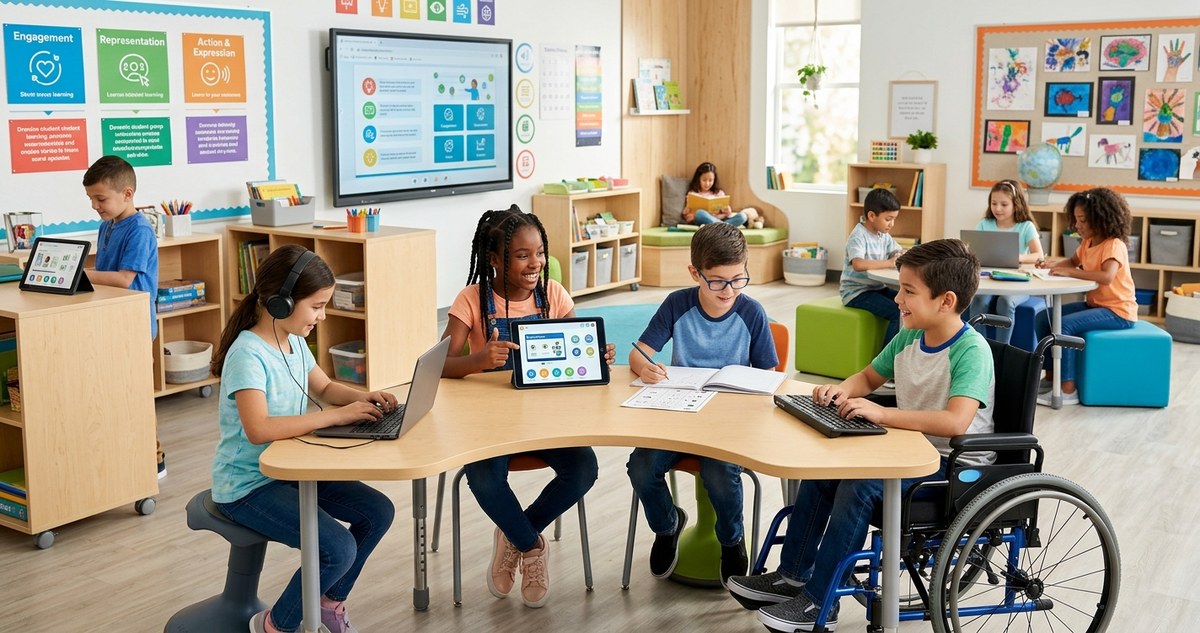
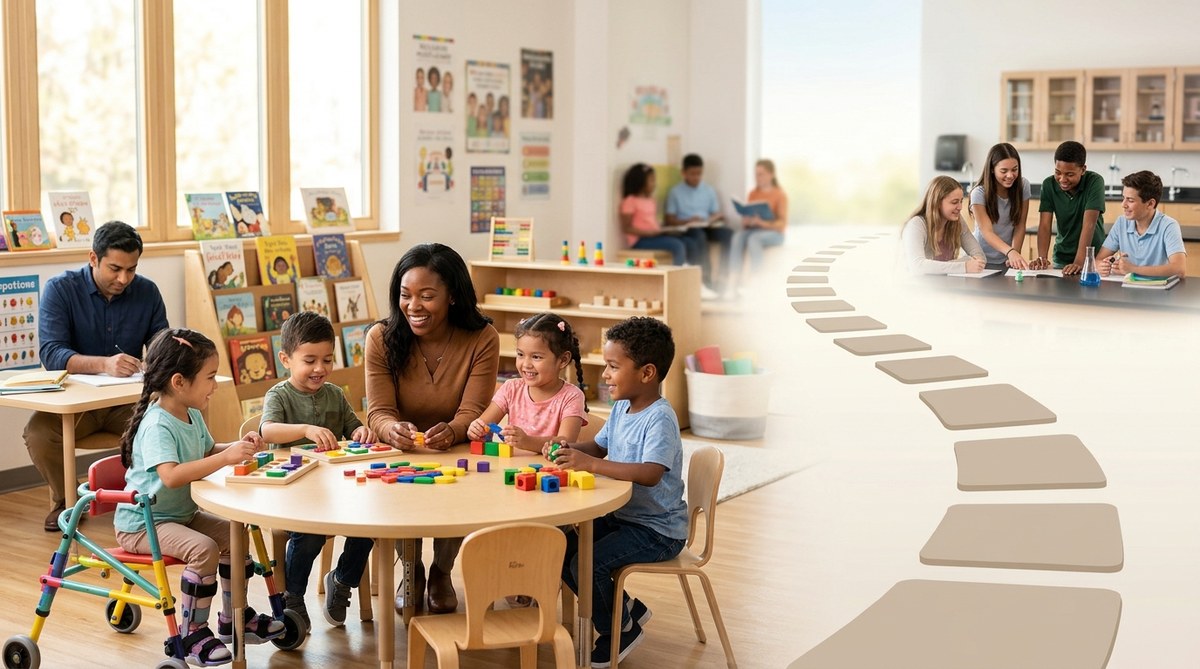
Physical spaces and materials also matter for equity. A classroom with natural light, flexible seating, and open ended materials invites exploration. A cramped room with broken furniture and outdated books sends a different message. Children notice. So do teachers.
Designing environments that reflect the cultures and languages of the children served is another equity move. Posters, books, and toys should represent the full diversity of the community. Outdoor play areas should be safe and accessible. For more ideas, see our article on creating inclusive learning spaces that foster student engagement.
Measuring Progress
You cannot improve what you do not measure. Districts and states should track:
- Enrollment rates by subgroup
- Teacher qualifications and turnover
- Kindergarten readiness scores
- Third grade reading proficiency
- Chronic absence rates in early grades
- Expulsion and suspension rates in preschool
When gaps appear, dig deeper. Are certain communities underserved? Are there barriers like transportation or language access? Data can reveal the next steps.
For guidance on using data effectively, check out how to use data to identify and address education gaps in underserved communities.
A Long Term Vision for School Equity
Early childhood education equity is not a standalone program. It is the first chapter of a larger story. When children start strong, they are more likely to read on grade level by third grade. That reading milestone predicts high school graduation. Graduation predicts economic mobility and civic engagement. By investing in the early years, we build a foundation that supports every later reform.
But this work requires persistence. Funding must be sustained. Workforce must be respected. Policies must be aligned. And advocates must keep equity front and center. The payoff is a generation of students who walk into kindergarten ready to learn, no matter where they were born.
Your Next Steps Toward Educational Equity
Whether you are a teacher, a principal, a school board member, or a parent, you have influence. Start by learning about the early childhood programs in your area. Ask who they serve and how they measure quality. Talk to families about what they need. Advocate for funding and policy changes. Use the tools and strategies shared here to build momentum.
Equity is not a destination. It is a daily practice. And it begins with the smallest learners. For additional resources, see our guides on empowering educators to advance educational equity in diverse classrooms and how community partnerships can strengthen education equity efforts. The work is hard, but the children are worth it. Start today.