elias

Every student deserves a school environment where they feel safe, respected, and ready to learn. Yet for too many students, especially those from marginalized communities, traditional discipline policies create barriers instead of opportunities. The data is clear: punitive approaches like zero-tolerance suspensions disproportionately affect students of color and students with disabilities, pushing them out of the classroom and into the school-to-prison pipeline. As we move through 2026, education administrators and policy advocates have a real chance to change this story. Designing equitable school discipline policies that support all students is not just a moral imperative. It is a practical strategy for improving academic outcomes, reducing chronic absenteeism, and building a positive school culture that benefits everyone.
Equitable school discipline policies in 2026 shift the focus from punishment to learning and growth. By centering restorative practices, using data to uncover bias, and involving students and families in policy design, schools can reduce exclusionary discipline by up to 50 percent. The result is safer classrooms, higher attendance, and stronger trust across the entire school community.
Why Traditional Discipline Models Fall Short
Old-school discipline relied on a simple equation: misbehavior equals punishment. A student talks back, they get detention. A student fights, they get suspended. This approach feels fair on the surface, but research shows it is anything but. National data from the U.S. Department of Education’s Civil Rights Data Collection consistently shows that Black students are suspended at rates three to four times higher than their white peers, often for the same behaviors. Students with disabilities face similar disparities.
The problem is not that these students misbehave more. The problem is that implicit bias, lack of training, and rigid policies lead to harsher consequences for the same actions. A student who cannot sit still due to trauma or an undiagnosed learning difference gets labeled as disruptive. A student who talks back because they feel unheard gets sent to the office instead of being given a chance to explain.
When we remove students from the learning environment, we do not fix the behavior. We just make the problem worse. Suspended students are more likely to fall behind academically, become disengaged, and eventually drop out. For schools serious about equity, the message is clear: we need a new playbook.
The Core Principles of Equitable Discipline in 2026
Before you rewrite your student handbook, it helps to understand the foundation that supports lasting change. Equitable school discipline policies rest on a few key ideas.
First, proportionality matters. The response to a behavior should match the severity of the incident. A student who uses a phone in class should not face the same consequence as a student who brings a weapon to school. Many current policies treat minor infractions with harsh punishments, which fuels disparities.
Second, context is critical. Why did the behavior happen? Was the student hungry, tired, or stressed? Did a peer provoke them? Was the rule itself unclear or unfairly applied? Policies that ignore context punish symptoms instead of root causes.
Third, repair over punishment. When harm occurs, the goal should be to make things right, not just to punish the wrongdoer. Restorative practices bring together the person harmed, the person who caused harm, and the community to find a resolution. This approach builds empathy and accountability.
Fourth, transparency and consistency. Policies must be written in plain language, shared with students and families, and applied the same way for everyone. If a rule is vague or applied unevenly, it creates room for bias.
Fifth, continuous improvement. An equitable policy is never finished. Schools must regularly review discipline data, listen to feedback from students and staff, and adjust as needed.
A Step-by-Step Process for Designing Your Policy
Ready to get to work? Here is a practical, numbered process your team can follow this school year.
-
Audit your current data. Before you change anything, you need to know what is happening now. Pull your district’s discipline records for the last three years. Break down the data by race, gender, disability status, and grade level. Look for patterns. Are certain groups overrepresented in suspensions or expulsions? Are specific teachers or schools referring students at higher rates? This baseline will guide your reforms. For a deeper look, check out our guide on how to audit your district’s discipline data for hidden racial and economic biases.
-
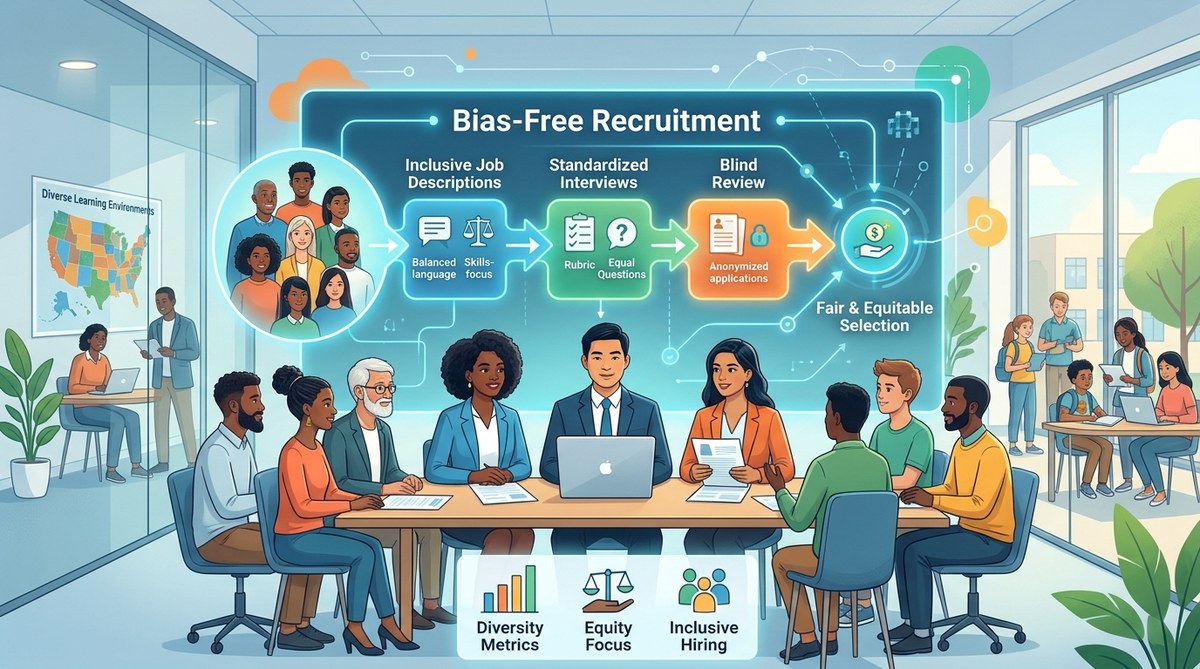
Build a diverse policy team. Do not write the new policy in a closed room with only administrators. Invite teachers, counselors, school resource officers, parents, and most importantly, students. Young people have powerful insights about what feels fair and what does not. A team that reflects the diversity of your school community will produce a stronger, more trusted policy.
-
Define clear expectations and consequences. Replace vague rules like “be respectful” with specific, observable behaviors. Instead of “no disruption,” say “raise your hand before speaking.” Then create a tiered response system. Minor infractions get a verbal warning or a brief check-in. Moderate infractions might involve a restorative circle or a written reflection. Major safety issues still require intervention, but even then, consider alternatives to out-of-school suspension.
-
Train every staff member. A policy is only as good as its implementation. Provide mandatory training on implicit bias, trauma-informed practices, and restorative justice. Teachers need to know how to de-escalate conflicts and when to refer a student to support services instead of the principal’s office. Ongoing coaching is more effective than a one-time workshop.
-
Launch, communicate, and iterate. Roll out the new policy with a clear communication plan. Send letters home to families, hold community meetings, and post the policy on your website. After the first semester, review your data again. Are disparities shrinking? Are teachers following the new guidelines? Make adjustments based on what you learn.
Common Mistakes and How to Avoid Them
Even well-intentioned reforms can go wrong. Here is a table that outlines frequent pitfalls and the smarter approach.
| Mistake | Why It Hurts Equity | Better Approach |
|---|---|---|
| Using suspension for minor issues like dress code violations | Removes students from class for non-violent behavior, disproportionately affecting marginalized groups | Address dress code issues privately with a conversation or a phone call home |
| Writing vague rules like “be a good citizen” | Leaves room for subjective interpretation and bias | Use clear, observable language: “Follow classroom instructions the first time they are given” |
| Failing to train staff on restorative practices | Teachers fall back on old habits when they lack skills | Provide hands-on practice with circle facilitation and conflict coaching |
| Ignoring student voice in policy design | Students feel the rules are done to them, not with them | Include student representatives on the policy committee and conduct anonymous surveys |
| Not tracking data after the policy changes | You cannot measure progress without numbers | Set quarterly data reviews and share results with the school community |
Restorative Justice in Action
Restorative justice is one of the most powerful tools for building equitable school discipline. Instead of asking “What rule was broken and what punishment fits?” restorative practices ask “Who was harmed and how can we repair the harm?” This shift changes everything.
A typical restorative circle brings together the student who caused harm, the student who was harmed, and a trained facilitator. They talk through what happened, how it affected everyone, and what steps can be taken to make things right. The goal is not to shame the student but to help them understand the impact of their actions and take responsibility.
“Restorative practices do not let students off the hook. They hold students accountable in a way that builds skills, not resentment. When a student has to look a classmate in the eye and hear how their actions hurt someone, that lesson sticks far longer than a detention slip.” — Dr. Mariam Williams, school climate researcher at the National Education Equity Lab
Schools that have implemented restorative programs see dramatic drops in office referrals and suspensions. One middle school in Oakland, California reduced suspensions by 74 percent over two years after switching to a restorative model. The key was consistency. Every staff member, from the principal to the cafeteria workers, used the same language and approach.
Using Data to Stay on Track
Data is your best friend in this work. Without numbers, you are just guessing. Here are a few ways to use data effectively.
- Track referral origins. Which teachers or classrooms send the most students to the office? If one teacher refers three times as many students as their peers, that signals a need for support or training.
- Monitor the timing of incidents. Are most referrals happening right before lunch, when students are hungry, or in the afternoon, when attention wanes? Adjust schedules or add brain breaks to address these patterns.
- Compare outcomes by subgroup. Every month, run a quick report showing discipline rates by race, gender, and disability status. If disparities grow, investigate why.
For more on using numbers to drive change, read our piece on how to use data to identify and address education gaps in underserved communities.
What to Do When Pushback Comes
Reforming discipline is hard work, and you will face resistance. Some teachers will worry that new policies are too soft. Some parents will demand harsh consequences for students who break rules. Some school board members will question the cost of training.
Prepare for these conversations with evidence. Share the research showing that exclusionary discipline does not improve school safety. It actually makes schools less safe by increasing student disengagement and dropout rates. Point to schools in your state or region that have successfully made the switch. Remind critics that equitable policies still hold students accountable. They just do it in a way that keeps kids in school and learning.
It also helps to start small. Pilot the new policy in one grade level or one school before rolling it out district-wide. Gather data from the pilot to show what works. Success builds momentum.
A Checklist for Your Policy Review
Use this bulleted list as a quick reference when evaluating your current or proposed discipline policy.
- Are the rules written in clear, specific language?
- Do consequences escalate in a logical, proportional way?
- Is out-of-school suspension reserved only for serious safety threats?
- Are restorative options available for every type of infraction?
- Have students and families been involved in the policy design?
- Is there a clear process for students to appeal a disciplinary decision?
- Does the policy address implicit bias in its application?
- Is there a plan for ongoing staff training every year?
- Will the district publish discipline data publicly each year?
- Is mental health support available for students who need it?
If you answered no to any of these, you have a clear starting point for improvement.
Building a Culture That Supports the Policy
A policy on paper means little if the school culture does not back it up. Equitable discipline works best in a school where students feel connected to adults, where they have trusted adults to talk to when they are struggling, and where the environment feels safe and welcoming. This is where broader equity work comes in.
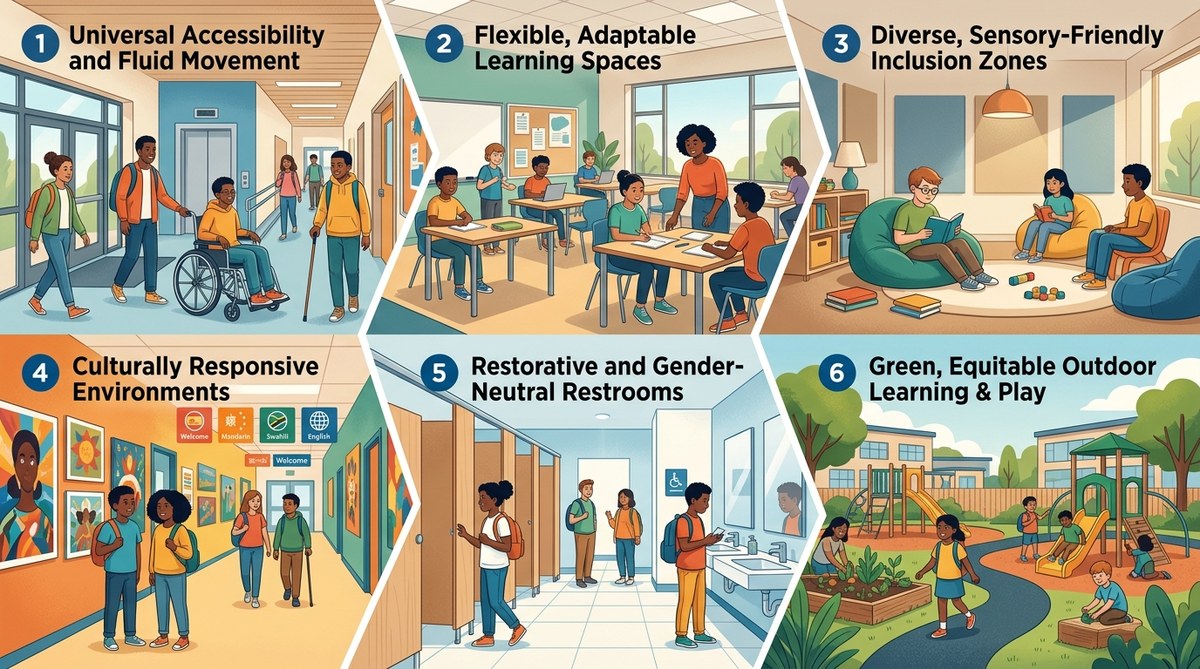
Schools that invest in building school policies that support child wellbeing and equity find that discipline problems decrease naturally. When students have access to mental health counselors, when classrooms use culturally responsive teaching, and when the physical environment is warm and inviting, students are less likely to act out.
Consider also how your school handles dress codes. Many dress codes disproportionately target girls and students of color. If your policy bans certain hairstyles or clothing styles common in specific cultures, it is time for a revision. Our guide on are your school’s dress codes targeting marginalized students? can help you think through this.
The Path Forward for 2026 and Beyond
Designing equitable school discipline policies is not a one-time project. It is an ongoing commitment to fairness, learning, and community. The work requires courage. You will have to challenge long-held beliefs about punishment and control. You will have to listen to students whose voices have been ignored. You will have to look at uncomfortable data about your own school.
But the payoff is real. Schools that embrace this work see higher attendance, better academic performance, and stronger relationships between students and staff. Teachers report feeling more supported and less stressed. Parents trust the school more. Most importantly, students stay in the classroom where they belong.
Start where you are. Use the data you have. Talk to the people in your building. Pick one change you can make this semester, whether it is training your staff on restorative circles or rewriting a vague rule. Small steps lead to big shifts.
Your students are counting on you. And with the right approach, you can build a school where every student has a fair chance to succeed.