elias
elias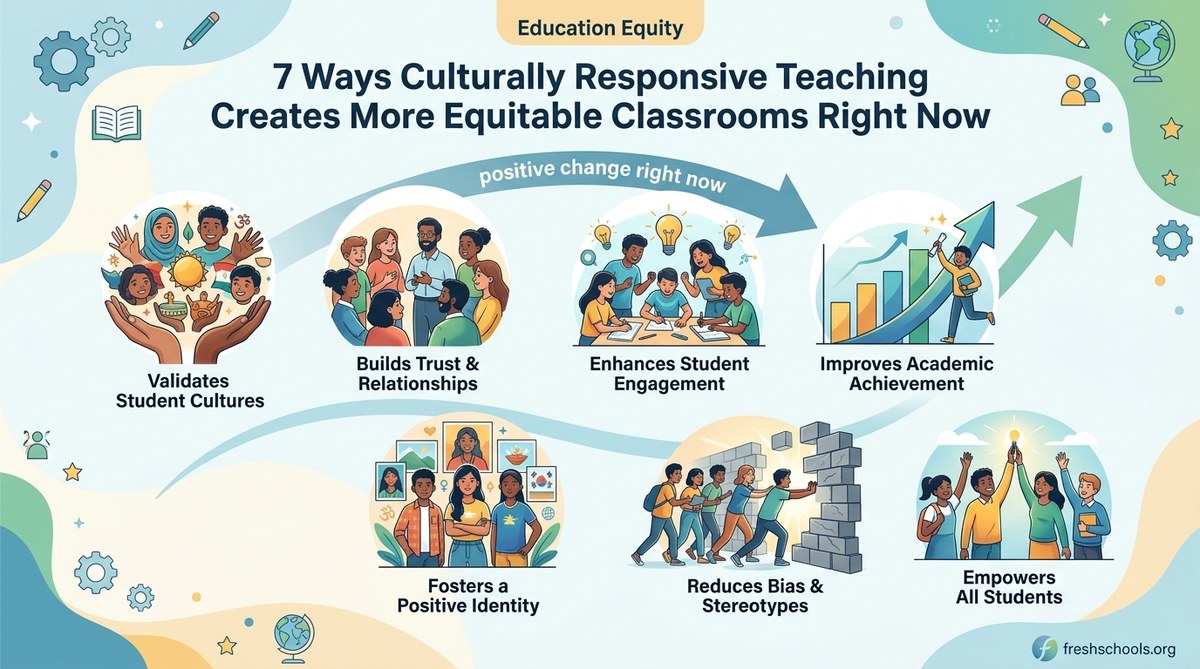
Walk into any classroom in America, and you will see a beautiful mix of backgrounds, languages, and lived experiences. The question is: does your teaching truly reflect that richness? Culturally responsive teaching isn’t just a buzzword. It is a proven approach that honors each student’s identity and helps them thrive academically. When done well, it transforms a room of desks into a community where every child feels seen, valued, and capable of success. The best part? These strategies don’t require a complete curriculum overhaul. You can start tomorrow with small, intentional shifts.
Culturally responsive teaching strategies build classroom equity by connecting learning to students’ identities and lived experiences. This guide offers five practical, research-backed methods you can use now. You will learn to avoid common pitfalls, adapt your curriculum, and create a classroom where every student feels respected and motivated to learn.
What Is Culturally Responsive Teaching?
Culturally responsive teaching (CRT) is a pedagogy that uses the cultural knowledge, prior experiences, frames of reference, and performance styles of diverse students to make learning more relevant and effective. It was first articulated by researcher Gloria Ladson Billings in the 1990s, and later expanded by practitioners like Zaretta Hammond. At its core, CRT recognizes that students come to school with rich cultural assets. Instead of asking students to leave those assets at the door, CRT brings them into the center of instruction.
This is different from simply “being nice” to diverse students. It is a deliberate, systematic approach that raises academic expectations while also validating who students are. In 2026, as classrooms grow more diverse every year, CRT is not optional. It is essential for closing opportunity gaps and ensuring every student can reach their full potential.
Why Culturally Responsive Teaching Matters Right Now
The post pandemic landscape of 2026 has laid bare deep inequities in our education system. Students of color, English learners, and students from low income households experienced the largest learning disruptions. At the same time, the national conversation around race, identity, and belonging has made classrooms central to building a more equitable society.
A culturally responsive classroom does more than boost test scores. It reduces behavior referrals, increases student engagement, and improves attendance. When students feel that their culture is respected and woven into the curriculum, they are more likely to take academic risks and persist through challenges. If you are looking for other ways to promote equity, you might find value in strategies to promote inclusive education for all students.
Five Practical Culturally Responsive Teaching Strategies
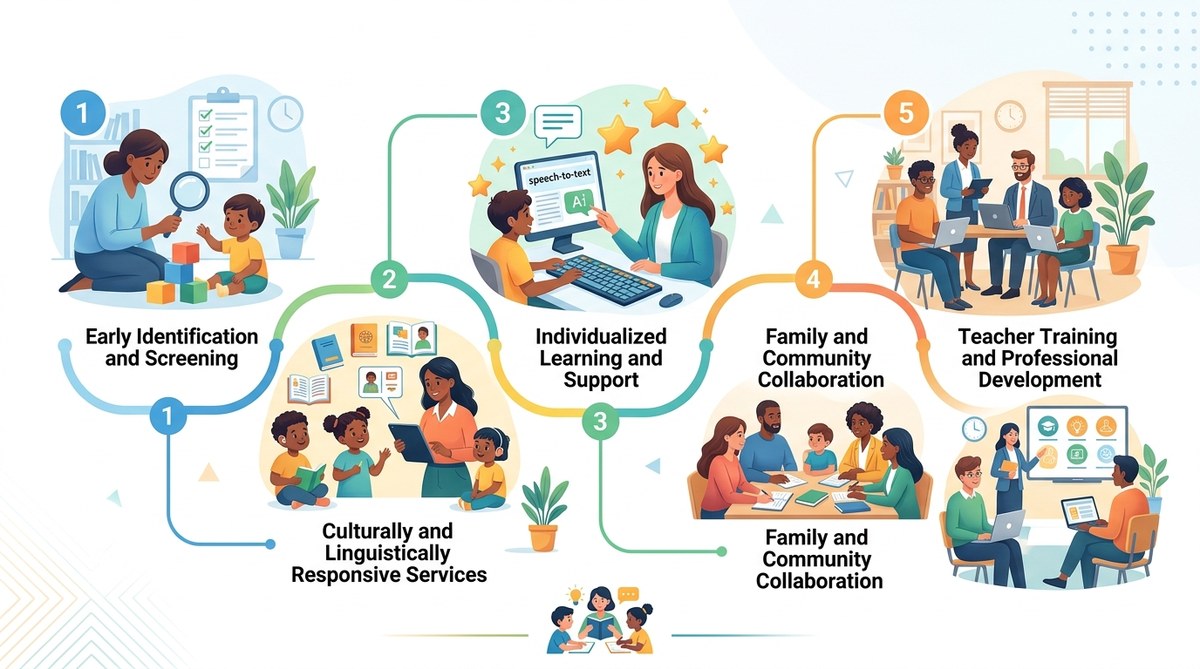
Here are five strategies you can start using this week. Each one is grounded in research and designed for real classrooms with real constraints.
1. Learn Your Students’ Stories
Before you can teach responsively, you need to know who is in front of you. This goes beyond knowing their names. It means understanding their family backgrounds, languages spoken at home, traditions, and even the challenges they face outside of school.
- Send home a “student inventory” questionnaire (in multiple languages).
- Spend the first weeks of school doing low stakes get to know you activities.
- Visit local community centers or attend events your students care about.
- Hold individual check ins where you ask about interests, not just grades.
This knowledge should then inform your lesson planning. If you have a class where many students are from El Salvador, you can include Latin American authors in your reading list. If several students are passionate about basketball, use sports statistics to teach math concepts.
2. Examine Your Curriculum for Gaps and Biases
Pull out your lesson plans and textbooks. Whose stories are missing? Whose perspectives are centered? A culturally responsive teacher actively looks for hidden biases and fills in the gaps.
- Audit your book collection. Do you have protagonists from multiple racial and ethnic backgrounds?
- Check your history lessons. Are you covering events from only one point of view?
- Update examples in word problems. Use names like “Maria” or “DeShawn” instead of only “John” and “Jane.”
- Include contributions from scientists, artists, and leaders of color.
This does not mean throwing out everything. It means supplementing and reframing. For more on tackling systemic barriers, see how schools can effectively address systemic barriers to education equity in 2026.
3. Use Culturally Relevant Examples and Analogies
When you explain a new concept, connect it to something students already know. This is called “cultural scaffolding.” For example, when teaching fractions, you can use recipes from different cuisines. When studying government, compare the three branches to the structure of a tribal council or a family leadership model.
The key is to choose examples that reflect the diversity of your students. A simile that works for a suburban student might not connect for a student from a rural farming community. Be curious and ask students to share their own analogies. They will often provide the best connections themselves.
4. Create a Community of Respect and High Expectations
Culturally responsive teaching is not lowered expectations. It is the opposite. You must communicate that every student is capable of rigorous work. This means avoiding deficit language and avoiding the trap of “soft bigotry of low expectations.”
- Use restorative practices instead of punitive discipline.
- Celebrate multiple types of success, not just the fastest test taker.
- Encourage collaborative group work where students learn from each other’s strengths.
- Call on every student equally, and give wait time so everyone can formulate a response.
When students know you believe in them, they start to believe in themselves. For a deeper look at discipline policies, read does your school’s discipline policy perpetuate inequity?
5. Invite Student Voice and Choice
Let students have a say in what and how they learn. This builds ownership and honors their individuality. You can offer choices in reading materials, project formats, or even assessment methods. A student who loves drawing might create a comic strip to explain a historical event. Another who loves technology might make a short video.
Choice also extends to classroom norms. At the start of the year, co create a set of community agreements with your students. Ask them: “How do we want to treat each other? What makes you feel safe to speak up?” When students help write the rules, they are more likely to follow them.
Common Mistakes vs. Effective Strategies
It can be helpful to see what CRT looks like in practice and what it should not look like. The table below clarifies some common pitfalls.
| Common Mistake | Why It Falls Short | Effective Strategy |
|---|---|---|
| Celebrating only “heroes and holidays” (e.g., Black History Month) | Reduces culture to isolated events and reinforces stereotypes | Integrate diverse perspectives throughout the entire year, every subject |
| Using the same examples for all students regardless of background | Assumes one size fits all; ignores individual differences | Learn each student’s interests and tailor examples to their lived experiences |
| Lowering academic expectations for certain groups | Perpetuates inequity and denies students access to rigor | Maintain high standards and provide the support needed to meet them |
| Only focusing on race and ignoring other identities (e.g., language, socioeconomic status) | Overlooks the full complexity of each student | Address all aspects of identity including language, family structure, and community |
| Avoiding conversations about race or injustice | Misses a teachable moment and signals that these topics are taboo | Facilitate brave discussions with protocols and norms for respectful dialogue |
“Culturally responsive teaching is not about celebrating diversity once a year. It is about using students’ cultural knowledge as a bridge to new learning.”
— Zaretta Hammond, author of Culturally Responsive Teaching and the Brain
Bringing These Strategies Into Your Daily Practice
You do not need to implement all five strategies at once. Start with one that feels manageable. Here is a simple process to help you get started.
- Reflect on your own identity and biases. Take 10 minutes to journal about how your background shapes your teaching.
- Choose one strategy from the list above. For example, learn your students’ stories through a home language survey.
- Try it for one week. Observe how students respond. Ask a colleague to give you feedback.
- Adjust and repeat. Keep what works, tweak what doesn’t, and then add another strategy.
If you want to go deeper on building inclusive learning environments, check out our guide on creating inclusive learning spaces that foster student engagement. Also, for more on how technology can support these efforts, see how technology can bridge education gaps and promote equity in U.S. schools.
Small Shifts Can Lead to Big Change
The educators we admire most are not the ones with perfect lesson plans. They are the ones who show up every day willing to learn alongside their students. Culturally responsive teaching is not a checklist or a one time training. It is a continuous journey of curiosity, humility, and action.
You already have the most important ingredient: a genuine desire to see every student succeed. Start with a single conversation, a revised word problem, or a new book on your shelf. Over time, those small shifts add up to a classroom where equity is not just talked about, but lived. Your students will notice. And they will thank you for it.