elias
elias
When schools join hands with local organizations, real change happens. Equity in education isn’t just about resources inside the classroom; it’s about the whole ecosystem surrounding a child. Community partnerships bring tutoring, health services, mentorship, and family support directly to students who need them most. These collaborations often become the bridge between systemic barriers and real opportunity. For educators and district leaders in 2026, the question isn’t whether to partner, but how to build partnerships that are deep, lasting, and truly equitable.
Community partnerships are a proven force for closing equity gaps. The most effective collaborations go beyond transactional service delivery. They center trust, shared power, and local knowledge. This article offers a step by step process, a clear table of do’s and don’ts, and real strategies you can use starting tomorrow. Your school or district can move from talking about equity to living it through community connection.
## Why Community Partnerships Are Essential for Education Equity
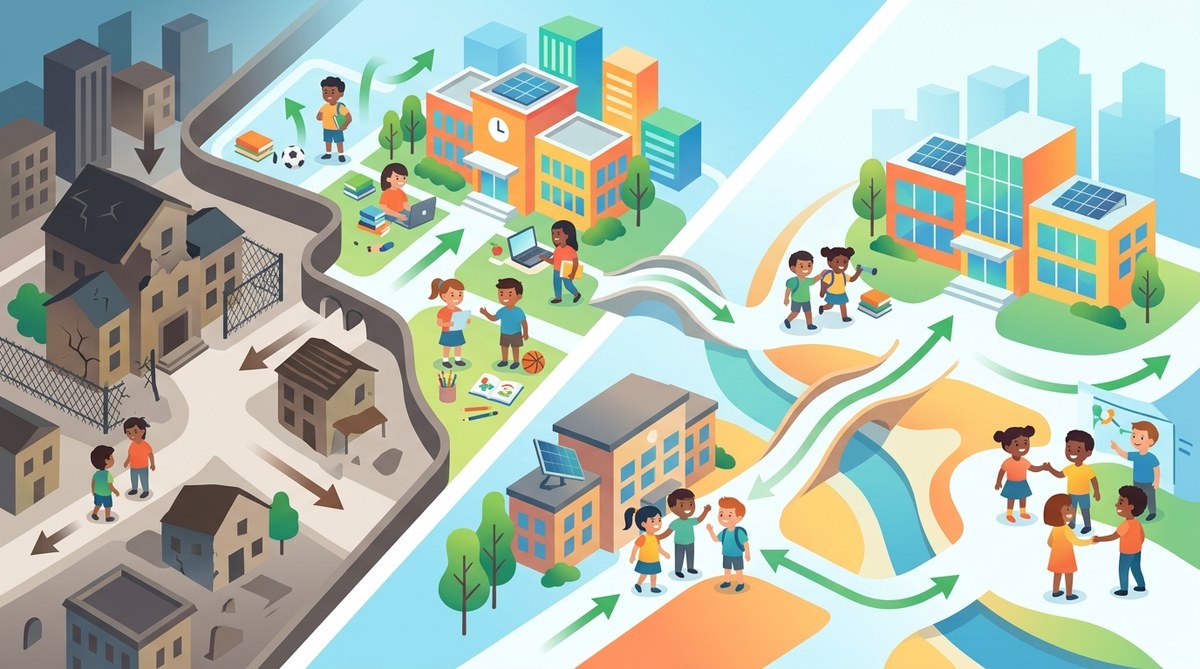
The traditional model of a school as an isolated institution can’t address the deep roots of inequality. Poverty, food insecurity, unstable housing, and lack of access to health care all affect a child’s ability to learn. A teacher alone cannot fix these issues. But a school that partners with a community health center, a food bank, a local nonprofit tutoring program, or a mentoring organization can create a support network that catches students before they fall.
Think about a student who misses school because of untreated asthma. A partnership with a nearby clinic can bring a nurse practitioner to school for regular checkups. That student stays healthy, attends class, and learns. That is equity in action. In 2026, many districts are formalizing these connections to make them routine, not exceptional.
**Benefits of strong community partnerships include:**
– Increased attendance and reduced chronic absenteeism
– Access to wrap around services (health, mental health, basic needs)
– Broader enrichment opportunities (arts, STEM, career exposure)
– Improved family engagement because trust is built through familiar community faces
– Shared accountability for student outcomes across multiple stakeholders
For a deeper look at how inclusive school design interacts with these efforts, read about [creating inclusive learning spaces that foster student engagement](https://freshschools.org/creating-inclusive-learning-spaces-that-foster-student-engagement/).
## A Step by Step Process to Build Equitable Partnerships
Building a partnership that actually advances equity requires more than a handshake and a memo. You need a process that deliberately shares power and centers the voices of those most impacted.
1. **Conduct an asset inventory, not a needs list.** Instead of asking “What do families lack?”, ask “What strengths exist in this community?” Map existing organizations, faith groups, small businesses, and parent leaders. They already hold trust. Start there.
2. **Invite community partners to co design the vision.** Hold listening sessions at times and places that work for families. Pay them for their time if possible. Use translators, provide childcare, and make it easy to show up. Let the community define what “equity” means in their context.
3. **Formalize roles with a shared agreement.** Write down each partner’s responsibilities, data sharing protocols, and decision making processes. Be explicit about how resources flow. Avoid vague promises. This step prevents power imbalances where the school dictates terms.
4. **Integrate partnership activities into the school day and calendar.** Equity happens when programs are not add ons that compete with academic time. For example, a mentoring program that meets during lunch or advisory period reaches more students than one that requires a parent to drive back in the evening.
5. **Track outcomes that matter to the community.** Test scores are important, but so are measures of belonging, self efficacy, and family satisfaction. Co create evaluation rubrics with partners. Use the results to adapt, not blame.
6. **Celebrate and iterate.** Hold joint celebrations of milestones. Then revisit the agreement annually. As the community changes, the partnership must evolve.
One district in Ohio applied a similar process and saw a 12% increase in third grade reading proficiency after pairing literacy coaches with local after school programs. The key was that the coaches were hired from the same neighborhoods where children lived.
If you want to tackle systemic barriers head on, see [how schools can effectively address systemic barriers to education equity in 2026](https://freshschools.org/how-schools-can-effectively-address-systemic-barriers-to-education-equity-in-2026/).
## Common Pitfalls and How to Avoid Them
Many well meaning partnerships stall because they repeat the same mistakes. The table below contrasts common missteps with proven alternatives.
| Mistake | Better Approach |
|———|—————–|
| School dominates the agenda; partners only execute | Co create goals and share decision making authority |
| One size fits all program design | Tailor services to the cultural and linguistic needs of the community |
| No dedicated funding for coordination | Budget for a community school coordinator or liaison role |
| Inconsistent communication (only when problems arise) | Schedule regular check ins and create a shared communication platform |
| Focus only on academic outcomes | Measure holistic indicators like student well being and family stability |
| Partners selected based on name recognition | Prioritize partners with deep roots and trust in the community |
A common refrain from frustrated community organizations is “The school only calls us when they need something.” True equity partnerships are reciprocal. The school also shows up for the partner’s community events. This mutual investment builds trust over time.
> “Partnerships fail when schools see community organizations as vendors rather than allies. Shift the mindset from ‘contract’ to ‘compact’ and you unlock real collaboration.” — Dr. Maria Gonzalez, Director of Equity Partnerships, National Education Alliance
## Real World Examples That Work
**Community Schools Model.** In New York City, community schools integrate health, social services, and family engagement directly into the school building. Research from 2024 showed that community school students in high poverty neighborhoods had significantly lower chronic absenteeism than peers in traditional schools. The model relies on a full time coordinator who manages up to a dozen community partners.
**Culturally Specific Mentoring.** A partnership between a school district in California and a local Latinx nonprofit matched middle school students with mentors who shared their heritage. The program operated inside the school during elective periods. After two years, participating students reported higher levels of school connectedness and a 20% reduction in behavioral referrals. The key was that mentors were trained not just in mentoring, but also in understanding systemic inequities.
**Health and Learning Integration.** A rural district in Mississippi partnered with a mobile health unit to provide vision screenings and glasses to every K 3 student. The result? Reading scores jumped because students could actually see the board. This is a clear example of addressing a non academic barrier to produce academic gains.
For more on how holistic supports boost student well being, check out [implementing effective school health programs to boost student well-being](https://freshschools.org/implementing-effective-school-health-programs-to-boost-student-well-being/).
## Overcoming Common Obstacles
Some leaders worry about time, money, and capacity. Let’s address those.
**Time.** You don’t need a new initiative. You can reallocate existing resources. For example, repurpose one professional development day to train staff on community partnership building. Or use Title I parent engagement funds to pay a parent liaison.
**Money.** Many grants exist specifically for community school partnerships. Federal 21st Century Community Learning Centers funding, local foundation grants, and even Medicaid reimbursement for school based health services can cover costs. Start small with one or two partners and scale.
**Capacity.** Assign one person in the district office to coordinate partnerships. This role pays for itself by reducing duplication and increasing grant compliance. Consider sharing a coordinator between several small schools.
If you are a district leader looking to build or refine policy, we recommend reading [building school policies that support child wellbeing and equity](https://freshschools.org/building-school-policies-that-support-child-wellbeing-and-equity/).
## How to Start Tomorrow
You do not need a perfect plan. You need a first step.
– Reach out to one organization that already has trust in your community. A church, a neighborhood center, a local YMCA.
– Invite them for coffee (or a video call). Ask: “What do you see that we don’t? What would make your work easier?”
– Offer something concrete: space in your building, access to your after school program, or data on student needs (within FERPA guidelines).
– Set a follow up meeting within two weeks.
That is how equitable partnerships begin: with a conversation, not a contract.
For educators who want to advance equity in the classroom, see [empowering educators to advance educational equity in diverse classrooms](https://freshschools.org/empowering-educators-to-advance-educational-equity-in-diverse-classrooms/).
## From Partnership to Movement: Your Next Step
Community partnerships are not just about closing gaps. They are about building a shared vision for what education can be. When schools open their doors and let the community in, they become hubs of opportunity and hope. The families you serve already have wisdom and strength. Your job is to create the structures that let that wisdom shape every decision.
Start small. Stay consistent. Keep the focus on equity, not convenience. Over time, these partnerships will transform not only student outcomes, but the entire culture of your school. And that transformation is the heart of educational equity.
Take one step this week. Call a partner. Listen. Then act.